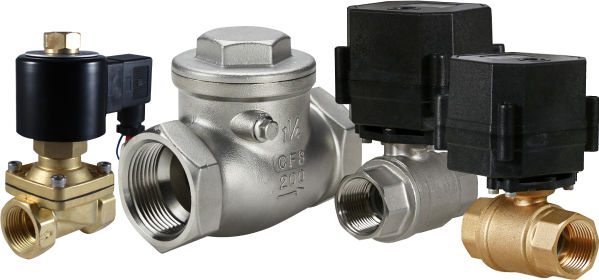
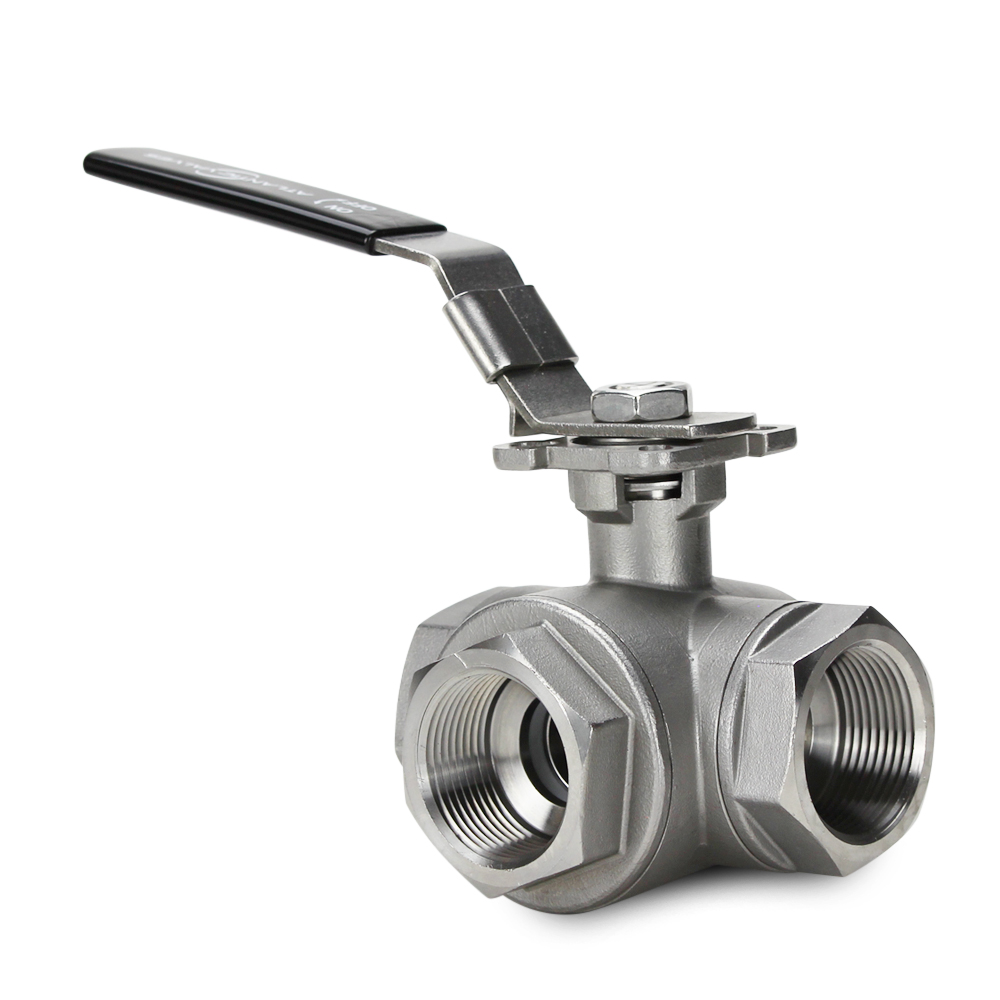
 3-Way Manual Ball Valves provide manual flow switching, diversion, and routing in threaded piping systems where a quarter-turn valve is preferred. This Atlantic Valves category includes stainless steel L-port and T-port configurations for water, air, oil, gas, and other compatible media.
The key selection point is the flow path. For example, buyers choose L-port valves to divert flow between two lines, while they use T-port valves to mix, branch, or connect multiple ports. In both cases, these valves use female NPT threaded ends, stainless steel 304 wetted components, PTFE seats and packing, reduced port construction, and an ISO 5211 mounting pad for future automation options.
Available Configurations
| Configuration Item | L-Port | T-Port |
|---|---|---|
| Valve type | 3-way manual ball valve | 3-way manual ball valve |
| Flow pattern | L-port | T-port |
| Primary function | Flow diversion or switching between lines | Mixing, diverting, or multiple line connection options |
| Port design | Reduced port | Reduced port |
| Body material | SS304 | SS304 |
| Connection type | Female NPT | Female NPT |
| Mounting pad | ISO 5211 | ISO 5211 |
| Seat material | PTFE | PTFE |
| Packing | PTFE | PTFE |
| Pressure rating | 1000 WOG | 1000 WOG |
| Available sizes | 1/4 inch to 2 inch | 1/4 inch to 2 inch |
Design and Performance
- Quarter-turn manual operation allows fast switching between flow paths
- Available in L-port and T-port configurations, so users can match the valve to the required routing pattern
- Reduced port design supports controlled diversion and routing service
- An investment cast body helps provide structural integrity
- SS304 wetted components provide general corrosion resistance
- PTFE seats and packing support broad general-service compatibility
- Blow-out proof stem design helps improve operational safety
- The locking handle device helps maintain position control
- Female NPT threaded ends support common industrial piping connections
- ISO 5211 mounting pad supports actuator mounting or future automation
Typical Applications
| Application / System | Typical Use |
|---|---|
| Process line diversion | Switching or routing between multiple process lines |
| Tank selection and manifold systems | Selecting tanks or routing between connected vessels |
| Fluid routing in process equipment | Manual flow path control within machine or skid layouts |
| Compressed air routing systems | Switching or distributing air flow between branches |
| Water distribution and utility lines | Flow routing across service or process water lines |
| Chemical transfer and blending systems | Routing or blending compatible media |
| Batch processing systems | Manual selection of fill, transfer, or recirculation paths |
| Instrumentation and sampling systems | Switching among instruments, test ports, or sample lines |
| HVAC water circulation systems | Changing service paths in circulation loops |
| Pump and equipment routing | Directing flow to alternate equipment paths |
Material Breakdown
| Component | Material |
|---|---|
| Body | SS304 |
| Cap (A) | SS304 |
| Seat | PTFE |
| Packing | PTFE |
| Stem | SS304 |
| Ball | SS304 |
| Lock device | SS304 |
| Handle | SS304 |
| Handle cover | Plastic |
| Cap (B) | SS304 |
| Positioning bolt | SS304 |
| Little washer | SS304 |
| Nut | SS304 |
| End seal B | PTFE |
Technical Resources
For 3-way manual ball valves, the first engineering check should be the required flow path, then pressure, temperature, connection type, and dimensions. In practice, the selection is usually not about whether the valve is manual. Instead, it is about whether the system needs an L-port or a T-port internal ball pattern.
- Download the 3-Way L-Port Manual Ball Valve spec sheet
- Download the 3-Way T-Port Manual Ball Valve spec sheet
- Confirm the required flow path before final selection
- Review pressure, temperature, and connection requirements
- Check material compatibility for SS304 and PTFE
- Contact Atlantic Valves for product support and quoting
Technical Note
These valves are not intended for use in medical life support, combustion, aviation, aerospace, automotive, or similar applications. Material compatibility should be reviewed before final selection, especially where chemical concentration, temperature, or pressure cycling may affect service life.