Valve sizing and selection is one of the most important decisions in any fluid systems. Incorrect valve sizing can lead to potential issues such as choked flow, inadequate flow capacity, cavitation, erosion, and noise. One critical concept used by engineer when sizing valve is valve flow coefficient (Cv).
What is Cv and how does it relate to valves?
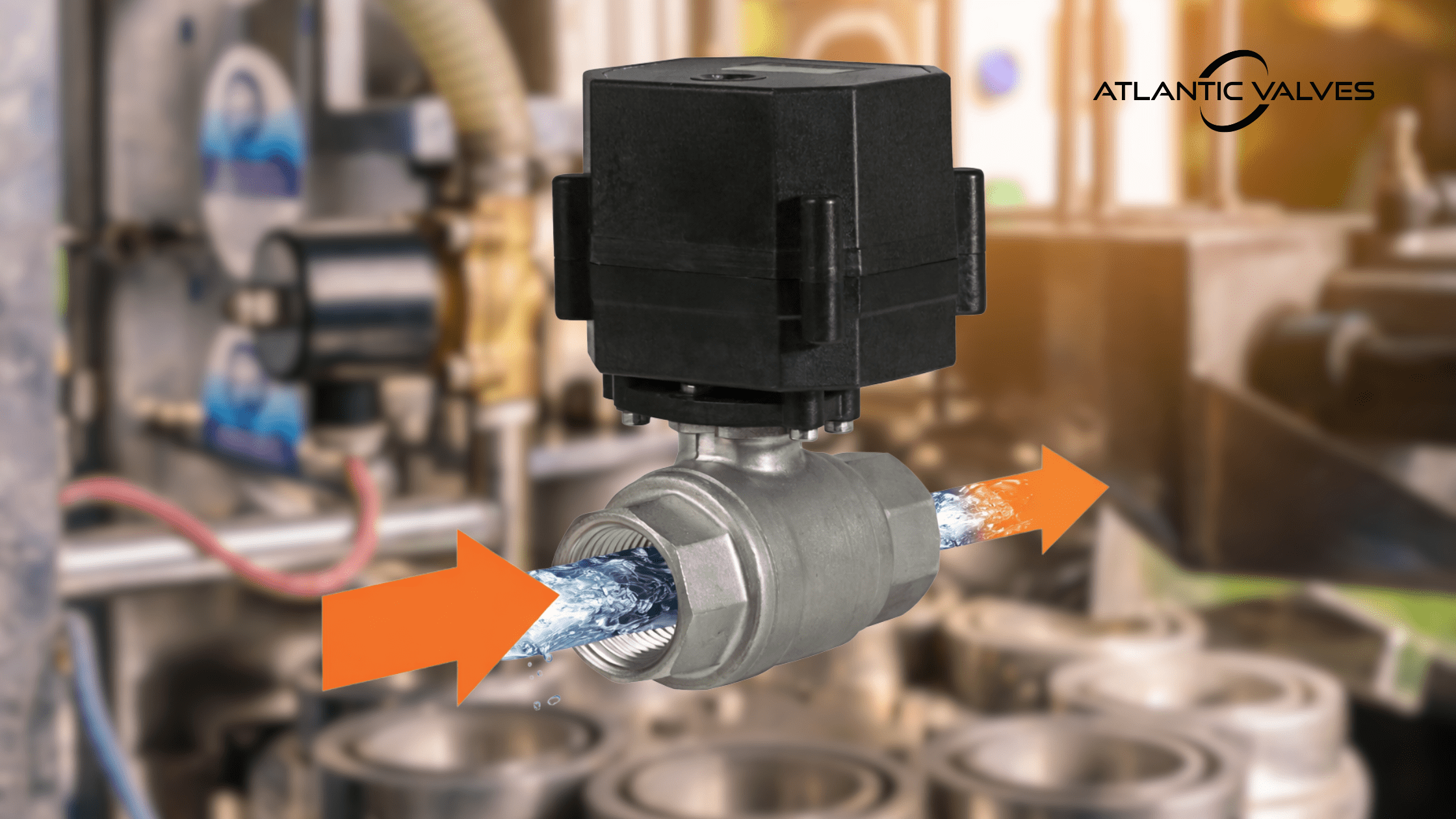
Cv or flow coefficient is the measure of the capacity of a valve to pass a fluid. It is defined as the flow rate of water at 60°F, expressed in US gallons per minute (GPM) that produces a pressure drop at 1 psi across it. In simpler terms, Cv tells how much flow a valve can support. A higher Cv indicates less resistance to flow, while a lower Cv indicates greater restriction. Since Cv is standardized, it allows meaningful comparison between valve sizes, designs, and manufacturers—provided it is interpreted within the context of the system in which the valve operate.
Why Valve Cv Sizing Matters
Correct valve sizing using Cv is critical because it ensures that:
- The valve operate within a range that can be controlled
- Precision of control of fluid flow
- Minimize energy loss due to pressure drops
- The system functions efficiently
Oversized valves often operate near the closed position, leading to poor control and stability
Undersized valves, on the other hand, may cause excessive flow difficulties and excessive pressure loss.
Both conditions increase wear, noise, and maintenance frequencey.
Cv vs Flow Rate: Understanding The Relationship
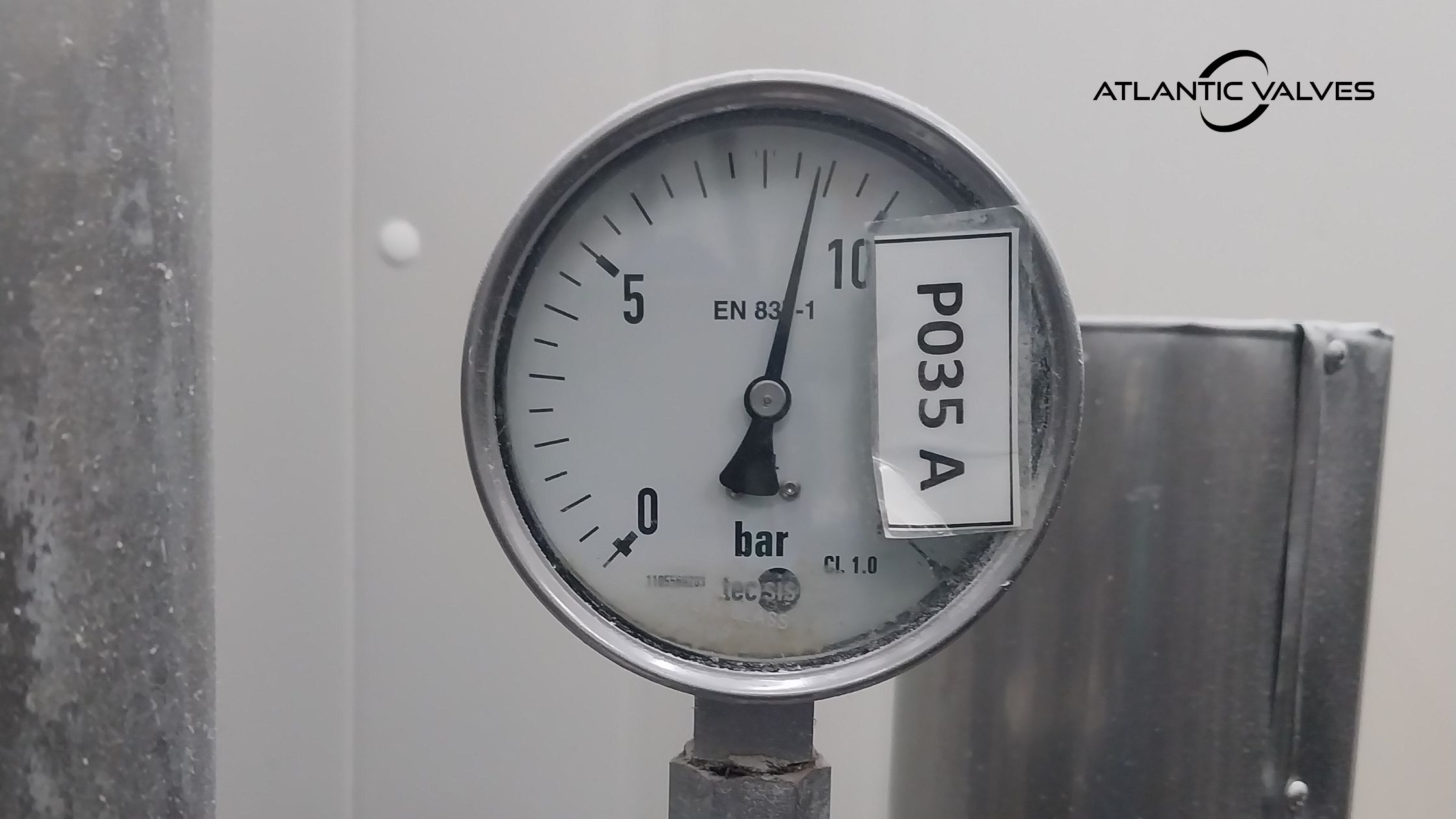
One of the factors to consider when computing Cv is the flow rate. Flow through the valve increases as the Cv and pressure drop increase. By correlating flow rate and pressure, the Cv value serves as critical parameter for predicting a valve’s performance and compatibility with specific fluid dynamic scenarios.
For Liquid service, the relationship is straightforward. In the case of gases and vapors, compressibility must be considered making the calculation more complex.
In liquid service, Cv is directly proportional to flow rate at a given pressure drop:
- Doubling the Cv will approximately double the flow (at the same pressure drop)
- Increase pressure drop will increase the flow through the same valve, assuming cavitation or flashing does not occur.
This relationship forms the foundation of valve flow rate calculation.
How to Calculate Cv for Liquid Applications
For liquid service, Cv can be calculated using the standard liquid flow sizing relationship under turbulent, non-choked conditions:

This equation relates flow rate, pressure drop, and fluid density, and is commonly used for preliminary valve sizing in liquid application
Where:
Cv = Valve Flow Coefficient
Q = Capacity / Flow rate in Gallons per minute (GPM)
ΔP = Pressure drop across the valve (psi)
SG = Specific Gravity of the fluid (water at 60°F= 1.0)
This formula assumes steady-state flow of an incompressible liquid and is valid when cavitation or flashing does not occur. For fluids, other than water, the specific gravity term accounts for differences in density.
Example calculation:
Assume the following:
- Flow rate: 70 GPM
- Pressure drop: 10 psi
· Fluid: water (SG = 1.0)
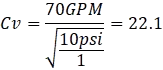
This means the Cv of approximately 22 or higher should be considered for the selected valve under the required operating position.
Valve Flow Rate Calculation for Gases and Steam
While Cv originated for liquid flow, it is also used gas and steam sizing with additional correction factors. Unlike liquids, gas flow is compressible which makes the relationship between flow rate and pressure more complex.
Gas flow depends on:
- Absolute inlet pressure
- Temperature
- Gas molecular weight
- Pressure ratio across the valve
In gas services, flow may reach choked (critical) flow, where increasing downstream pressure drop no longer increases flow. When this occurs, the valve’s capacity is limited by sonic velocity at the vena contracta then pressure differential.
Because of these effects, Cv calculations for gases and steam differ significantly from liquid calculations and require compressibility and temperature corrections. In practice, gas and steam valve sizing is typically performed using manufacturer sizing equations or dedicated sizing software rather than simplified manual calculations.
Valve Sizing Using Cv: Step-by-Step Approach
Effective valve Cv sizing follows a process that reflects how the valve will actually be used.
Define the Operating Range
Sizing should be based on normal operating flow, not just maximum design flow. Minimum and startup conditions are equally important, particularly for control applications.
Proper sizing ensures the valve operates within an effective control region rather than near its fully open or fully closed position.
Assign Pressure Drop Intentionally
Pressure drop across a valve should be treated as a deliberate design variable, not an afterthought.
- Control valves require sufficient pressure differential to maintain authority and stable control.
- Isolation or on/off valves generally benefit from minimizing unnecessary pressure loss to reduce energy consumption.
Valve body materials and internal trim design also influence flow efficiency. Factors such as surface finish, port geometry, and trim contours directly affect pressure loss, noise generation, and long-term wear within the valve.
Select Cv Based on Travel, Not Size
Published Cv values are typically given at full open. In throttling service, the target is stable mid-travel operation rather than seat-level throttling or full-open operation.
Selecting a valve solely based on line size or maximum Cv can result in poor controllability. Proper Cv selection ensures the valve operates in a usable travel range where small changes in position produce predictable changes in flow.
Review Velocity and Service Limits
High Cv values combined with compact valve geometry can lead to elevated internal flow velocities. Excessive velocity increases the risk of erosion, noise, and premature wear, particularly in slurry service, dirty fluids, and high-cycle applications.
In addition to Cv, valve selection should consider internal port geometry, allowable velocity limits, and service conditions to ensure long-term reliability and acceptable performance.
Common Mistakes in Valve Cv Sizing
Across industries, similar CV-related problems appear repeatedly. These issues are usually identified only after a system is operating, when adjustment options are limited.
Even experienced engineers can encounter issues if Cv is misunderstood. We commonly see valves that technically meet the required Cv but operate almost entirely near the seat during normal production. In those cases, control instability and accelerated wear follow quickly, even though the original sizing calculation was correct.
Common mistakes include:
- Sizing based only on-line size instead of the required Cv
- Ignoring minimum flow conditions, leading to oversized valves
- Neglecting fluid properties such as viscosity or flashing potential
- Ignoring Future system expansions, understanding a system’s current and future requirements, and potential expansion.
- Usinga full-open Cv for control valves without considering the operating position
Final Notes
Valve is Cv is more than just a datasheet value. Understanding the Cv flow coefficient, recognizing how Cv vs flow rate changes once a valve is installed, and applying disciplined valve sizing using Cv are key to avoiding common selection and commissioning issues. When these factors are considered together, Cv becomes a useful validation tool rather than a source of false confidence.
The most reliable valve installations are typically the result of careful review rather than complex calculations. Using Cv with a clear view of how the system will actually operate helps ensure predictable performance, stable control, and longer service life.