
Food and beverage plants live under constant pressure. Product safety, audits, and uptime all have to line up, whether you are running a brewery, bakery, dairy, bottling plant, snack facility, or central kitchen.
Valves sit in the middle of that reality. The wrong material choice can show up as stress cracking, corrosion, flavor taint, or, in the worst case, contamination and a recall.
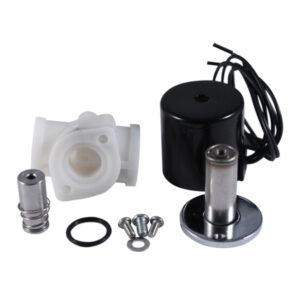
Food-grade plastic valves give engineers and distributors another way to control risk while keeping costs sensible. When specified correctly, they offer strong corrosion resistance, good compatibility with many cleaning chemicals, and lower weight compared to metal valves. Atlantic Valves supports this need with plastic solenoid and electric ball valves for potable water and utility service, alongside stainless and brass valves for higher temperature and direct product contact duties.
This guide explains what “food grade” really means in this context, where plastic valves belong in food and beverage facilities, and how to specify them when the valves are lead-free but not NSF certified.
What “Food Grade” Really Means for Plastic Valves
In practice, “food grade” is less about a badge and more about three questions.
- Are the wetted materials compatible with the product and cleaning chemicals at the temperatures and pressures in the line?
- Can the valve support the facility’s own standards and regulatory obligations, including potable water or food contact, where required?
- Is the valve design cleanable and maintainable, without hidden pockets that trap residues?
Typical construction for food-grade plastic valves used in food and beverage environments:
- Body materials such as PA66 (engineered nylon), POM, polypropylene, or similar engineering plastics. These are widely used in potable water and beverage-related services when operated within their published limits.
- Elastomers such as EPDM in diaphragms or seals, which perform well with many water-based media and hot water, are common in plastic solenoid valves for drinking water and RO systems.
For distributors, the takeaway is simple. Do not assume that “food grade” on a spec sheet equals a formal certification. Treat it as a signal about materials and lead-free design, then match that against each plant’s requirements.
Why food-Grade Plastic Valves Belong in Hygienic Plants
Stainless steel will remain the default for direct product contact and demanding high-temperature service. Plastic valves complement stainless steel by solving problems that metal struggles with or that are overkill for the duty.
1. Corrosion resistance in washdown and chemical zones
Food and beverage facilities use caustics, acids, disinfectants, and chlorinated water at scale. These can attack carbon steel and even some stainless steels over time.
Correctly selected plastic valves resist this corrosion and help avoid:
- External rust and flaking paint on valve bodies.
- Stiff or seized operators around fillers and packaging lines.
- Fastener and bracket corrosion in aggressive washdown areas.
This is relevant across segments, from brewery keg washers and CIP skids to bakery wash areas and dairy bottling halls.
2. Lightweight and easier to handle
Plastic valves are significantly lighter than their metal equivalents. In real terms, this means:
- Easier, safer handling in tight skids and overhead locations.
- Less stress on plastic manifolds, tubing, and light structural members.
- Lower freight cost and simpler kitting for replacement valves and spares.
OEMs that build brewhouses, tunnel washers, proofers, or bottling equipment can keep panel and skid weight under control by using plastic where it is appropriate.
3. Cost-effective in non-critical lines
There is no justification for stainless steel everywhere. In most facilities, stainless handles the main product paths while plastic handles support duties.
Typical examples across food and beverage:
- Potable and RO water feeding brewhouses, mixers, cook kettles, and CIP make-up tanks.
- Utility water loops serving bakeries, snack fryers, and washdown stations.
- Low-pressure dosing of additives and ingredients that are compatible with the chosen plastic and elastomer.
- Chemical dilution skids and non-product contact circuits.
In these areas, a lead-free, food-grade plastic valve is often the most practical and economical choice.
Where food-grade plastic valves are used in food and beverage facilities
Look across a modern plant, and you will see plastic valves in more places than you might expect.
Potable water and RO systems
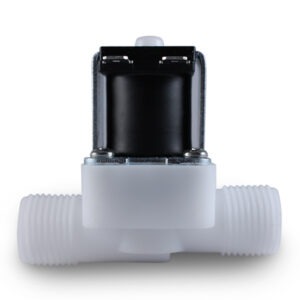
Plastic solenoid valves are common on:
- RO and filtration skids feeding breweries, dairies, and soft drink plants.
- Pre-treatment systems for bakery and snack facilities that are sensitive to water quality.
- Point of use treatment for ingredient water at mixers and kettles.
In these services, plastic solenoid valves typically control potable water under moderate pressure and temperature. The key is simple: stay within the valve’s published ratings and confirm compatibility with any cleaning or sanitizing chemicals that might backfeed.
Ingredient dosing and blending
Where pressures are moderate, and liquids are non-oxidizing and compatible with the chosen plastic and seals, food-grade plastic valves can control:
- Flavor and syrup dosing on beverage and juice lines.
- Liquid sweeteners and minor ingredients in bakeries and confectionery plants.
- Enzyme or additive dosing into brew kettles or fermenters, if within rating and plant standards.
These are usually low-pressure, low solids lines where corrosion resistance and cost are more important than high temperature capability.
Washdown, rinsing, and utilities
Plastic solenoid and electric ball valves are also well suited for:
- Bottle and can rinsers in beverage plants.
- Conveyor and equipment washdown circuits in meat, dairy, and bakery facilities.
- CIP return and drain controls that do not see high temperature or abrasive slurries.
- Utility water distribution for hand-wash stations and hose reels.
All of these are good cases where stainless steel in every position would be over-specified.
Key Selection Criteria for Food-Grade Plastic Valves
When you recommend plastic valves for a food or beverage facility, a few selection checks are non-negotiable.
1. Match body material to media and temperature
Confirm:
- The exact plastic family used in the body.
- Maximum operating pressure and temperature for continuous service.
- Any media limitations are called out in the datasheet.
If the line ever sees high-temperature product, steam, or very hot caustic solution, move that duty to stainless steel valves instead of plastic. Use plastic where the expected temperature and chemistry are comfortably within the plastic’s capability.
2. Select the right elastomers
In many cases, the elastomer, not the plastic body, is the limiting factor.
Common patterns:
- EPDM seals and diaphragms
Well-suited to many water-based media and hot water within rating. Generally not recommended for oils and many fats. That matters in dairies and meat facilities where fat content is higher.
- PTFE valve seats
Common on ball valves, widely used for food related services when combined with appropriate body materials.
Distributor checklist:
- Confirm seal or diaphragm material for each part number, not just the body material.
- Check compatibility against the product and all cleaning chemicals.
- Verify that maximum temperature covers both process and cleaning cycles, not just normal running.
3. Understand pressure, flow, and valve type
Food and beverage facilities combine gentle transfers with high speed on and off control.
Consider:
- Zero differential plastic solenoid valves for gravity-fed tanks, low-pressure RO, and drain or return lines where you cannot guarantee a minimum differential pressure.
- Piloted solenoid valves where you have a pressure drop and want higher flow capacity.
- Manual or electric plastic ball valves where full port, low pressure drop, and clear open or closed indication matter more than rapid cycling speed.
Size for CV and line pressure, not just nominal port size, to avoid chattering or slow response.
4. Cleanability and maintainability
Cleaning is as important as initial installation in any hygienic environment.
For plastic valves:
- Choose designs with clear flow arrows and orientation, and mount them so the valve can drain when open.
- Use full-port ball valves where you need easy flushing or pigging.
- Install Y strainers upstream of plastic solenoid valves on any line that may carry debris, such as bakery wash lines or brewery utility water, so diaphragms and seats are not damaged by particles.
Pair plastic valves with stainless Y strainers and stainless isolation ball valves so maintenance teams can flush and swap assemblies without cutting pipe.
Plastic versus stainless in the same facility
You do not need to choose all plastic or all stainless. A more credible position with plant engineers and QA teams is a split strategy.
Use stainless steel valves for:
- Direct product contact lines on beer, dairy, syrup, sauces, and similar.
- High temperature services, steam, and very hot CIP loops.
- Areas with strict hygienic or sanitary connection requirements.
- High risk points where a failure has a direct food safety impact.
Use food-grade plastic valves for:
- Potable water and RO feed into the process and CIP make-up tanks.
- Low-pressure ingredient and utility lines that are chemically compatible.
- Washdown, rinsing, and non-product contact cleaning circuits across bakeries, breweries, and other plants.
- OEM skids and panels where weight and cost need to be controlled.
Atlantic Valves supports this mix with stainless steel solenoid, ball, and check valves for critical services, and lead-free plastic solenoid and electric ball valves for compatible water and utility duties.
The result is a plant that stays audit-ready and reliable without overspending on stainless in every position.
A practical distributor checklist
When a customer says, “We need food-grade plastic valves,” walk them through this sequence.
-
Clarify the application
- Segment: brewery, bakery, dairy, bottling, snack, frozen foods, etc.
- Is the valve in direct product contact, potable water, or non-product utility?
- Minimum and maximum pressure and temperature.
- Product properties and all cleaning or sanitizing chemicals that will contact the valve.
-
Choose valve function
- Solenoid, manual ball valve, or electric ball valve.
- Normally closed or normally open, and desired fail position on power loss.
- Zero differential or piloted operation.
- Solenoid, manual ball valve, or electric ball valve.
-
Confirm body and seals
- Body plastic type, with media and temperature limits.
- Seal or diaphragm material, checked against product and cleaners.
- Lead free wetted path where potable water or product contact is involved.
-
Check certification and documentation
- Make it explicit that these valves are not NSF or FDA certified.
- Confirm that the plant is comfortable approving them under its own standards.
- Provide datasheets and material information for their files.
-
Plan for service and spares
- Add strainers and isolation valves where needed.\
- Standardize on a small set of plastic valve models per site.
- Build a spare parts kit with coils, seals, and a few complete valves.
Handled this way, food-grade plastic valves become a controlled, low-risk way to cut corrosion issues and unnecessary stainless steel spend across multiple food and beverage segments.
Wrap Up
Food-grade plastic valves are not a stainless steel replacement. They are a targeted tool for the parts of the process where corrosion resistance, chemical compatibility, and cost efficiency matter more than high temperature performance or sanitary design.
When you match plastic bodies and elastomers to the actual media, pressure, temperature, and cleaning regime, plastic solenoid and electric ball valves can safely handle potable water, compatible cleaning solutions, and low-pressure ingredient and utility lines in breweries, bakeries, dairies, bottling plants, and more.
The key is honest positioning. Make it clear that these valves are lead-free and suitable for the right applications, but not NSF certified. Then back that up with a disciplined selection process and a reliable supply partner.
For distributors, that means fewer RMAs, more repeat business, and a stronger relationship with engineers and QA teams who are tired of vague “food grade” claims.
Standardize your next project around a mix of stainless and plastic valves. Contact Atlantic Valves to build a recommended valve list for your food and beverage plant.