In industrial distribution, especially when dealing with solenoid valves, UL certification shows up early in most valve specifications. However, the way it is applied is often misunderstood in practice. For industrial distributors, the issue is not defining UL itself—it’s understanding how different UL designations affect product selection, compliance, and project approval.
In solenoid valve applications, the distinction between UL Listed and UL Recognized is not just a labelling detail. For this reason, you must decide whether to install the valve as a standalone unit or integrate it into a larger system for evaluation. This becomes critical in regulated applications such as fire protection, gas shutoff, and control panel assemblies, where inspection and approval depend on the correct certification.
This article examines how UL certification applies to solenoid valves, where the differences matter, and how those differences influence real-world distribution decisions.
Understanding UL Certification in the Context of Solenoid Valves
Underwriters Laboratories (UL) is an independent safety certification organization that develops standards and tests products for electrical, mechanical, and fire-related safety. The UL mark assures that a product meets rigorous safety requirements.
Manufacturers apply UL certification to solenoid valve under specific standards such as UL 429 (Electrically Operated Valves). In addition, engineers and inspectors often reference system-level standards such as UL 508A (Industrial Control Panels) and NFPA fire protection codes when evaluating industrial installations.
Although these standards serve different purposes, each plays an important role in product selection, system design, and regulatory compliance. Therefore, distributors, OEMs, and end users should understand how these certifications apply to specific applications.
In practice, two UL designations commonly appear in solenoid valve specifications:
- UL Listed
- UL Recognized
That difference becomes important when dealing with UL certified solenoid valves, especially in applications where compliance is not just preferred, but required.
In industrial distribution, misunderstandings rarely stem from the definitions themselves. Instead, distributors, engineers, and inspectors often encounter challenges when applying certifications to real-world projects. For example, a solenoid valve may meet all performance requirements, yet inspectors can still reject it if the project specifies the wrong UL designation. As a result, understanding and selecting the correct certification helps prevent compliance issues, project delays, and costly rework.
Where UL Certification Applies: Actuator vs Valve Assembly
In solenoid valves, UL certification can apply to different parts of the product depending on how it is evaluated.
| Complete Valve Assembly
(UL Listed) |
Actuator or component-level certification (UL-Recognized) |
When a solenoid valve is UL Listed, the certification applies to the entire unit:
The valve is tested as a single functional device, typically under UL 429. Electrical and mechanical performance are evaluated together. |
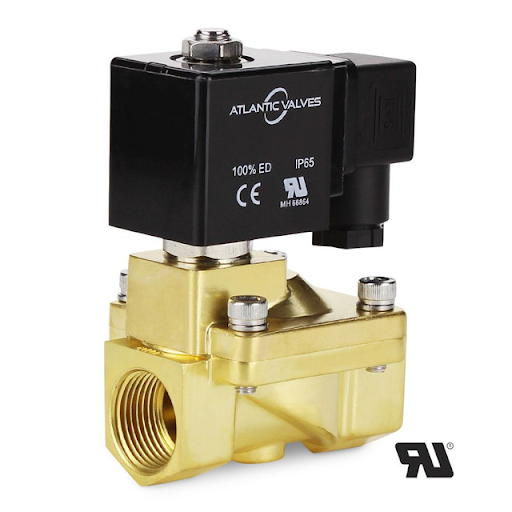
In many industrial designs, the solenoid coil is UL-Recognized as a component:
The certification applies only to defined characteristics of the component, not the full valve. |
Mixed certification configurations
A common configuration in industrial valves:
- UL-Recognized coil
- Non-UL-listed valve body (mechanically compliant)
- No UL Listing for the complete assembly
This is acceptable in OEM equipment and control systems but does not meet requirements where UL Listed valves are specified.
Identification in practice
- UL Listed → marking on valve nameplate or body
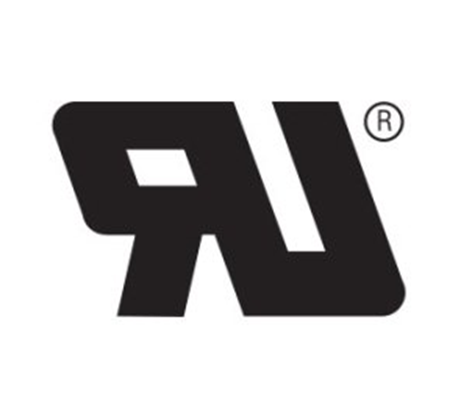
- UL-Recognized → UR mark typically on coil
This distinction is often visible during inspection and affects acceptance.
UL Listed Solenoid Valves
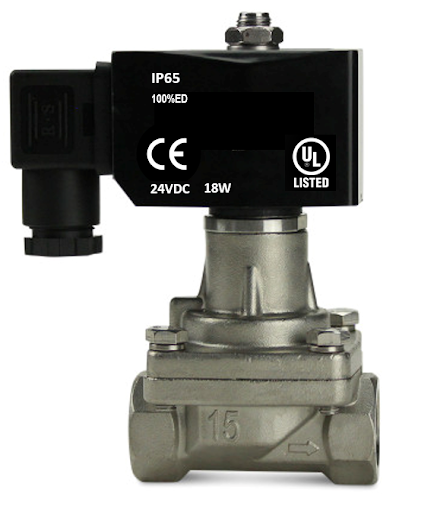
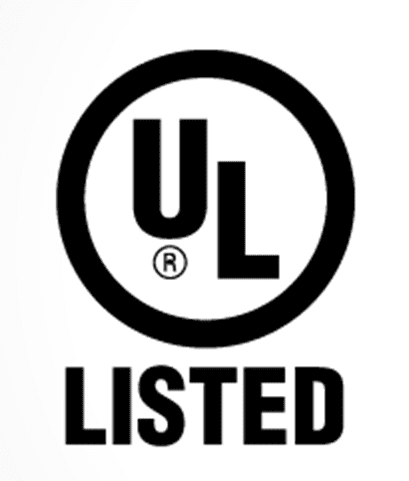
A UL-listed solenoid valve is evaluated as a complete end-use product. Essentially, the certification covers the valve in its final configuration, encompassing all electrical, mechanical, and functional characteristics.
Scope of Evaluation
Testing typically includes:
- Electrical safety – coil insulation, temperature rise
- Pressure containment and leakage
- Functional operation – cycle testing
- Environmental resistance where applicable
Installation and Use
- Can be installed directly in the field
- Accepted by authorities having jurisdiction (AHJs)
- No additional certification is required for use within rated conditions
Application Context
- Fire protection systems like NFPA 13 (Sprinkler systems), NFPA 20 (Stationary pumps), NFPA 72 (Fire alarm systems), and NFA 54/58 (Gas systems)
- Gas shutoff systems
- Emergency isolation systems
UL-Recognized Solenoid Valves
Scope of Evaluation
- Specific electrical characteristics
- Material performance
- Defined operating limits
System-level performance is not included.
Installation and Use
- Not intended for standalone installation
- Requires evaluation within a UL-compliant system
- Subject to conditions of acceptability
Typical applications
- OEM equipment
- Control panels (UL 508A)
- Packaged systems and skids
Key Differences in the Context of Solenoid Valves
| Aspect | UL Listed Solenoid Valve | UL-Recognized Solenoid Valve |
| Classification | End-use product | Component |
| Installation | Direct field use | Requires System Integration |
| Testing Scope | Full product | Limited Scope |
| Approval | Straightforward | Required Evaluation |
| Marking | UL Listed | RU mark |
| Use Case | Fire protection, standalone | OEM assemblies |
Why Distributors Need to Pay Attention
- Specification Compliance
If a project calls for a UL-listed solenoid valve, a UL-Recognized alternative does not meet the requirement—even if performance is similar.
- NFPA Requirements
Standards such as NFPA 13 require listed components in fire protection systems. This makes the certification type mandatory, not optional.
- Control panel integration
Manufacturers commonly install UL-Recognized solenoid valves in control panels and packaged systems. In these applications, testing agencies evaluate these valves as part of a complete assembly instead of as standalone devices. Therefore, OEMs frequently use UL-Recognized components in systems that undergo certification as a finished product.
In control panel applications:
- UL only evaluates specific characteristics of the component (e.g., electrical performance), not the full system
- The final safety of the equipment depends on how that component is applied in the assembly
For control panel applications, the applicable reference standard for these requirements is UL 508A.
- Procurement substitutions
A recurring issue in distribution is substitution during procurement.
Example:
- Engineer specifies: UL Listed solenoid valve
- Buyer sources: UL-Recognized valve (lower cost or more available)
They are not interchangeable, especially in regulated applications.
Interaction with UL 429
UL 429 defines construction and performance requirements for electrically operated valves.
Key areas include:
- Coil construction and insulation systems
- Mechanical strength of valve bodies
- Operational endurance testing
- Safety under abnormal conditions
UL-Listed solenoid valves are evaluated against UL 429 as complete products. UL-Recognized components may be assessed against selected clauses depending on intended use.
Interaction with UL 508A
UL 508 is a safety standard that covers industrial control equipment used to control motors, machines, and process systems. Specifically, it defines requirements for the construction, performance, and testing of devices such as motor starters, relays, switches, and similar control components.
Consequently, within this framework, solenoid valves—particularly those with UL-Recognized components—are treated as part of the overall panel system rather than as standalone devices.
For UL-Recognized solenoid valves:
- Must comply with Supplement SA
- Conditions of acceptability apply – mandatory requirements that define how the component must be used (e.g., voltage limit, temperature, protection, and installation)
- The panel builder takes responsibility for system integration
UL-listed valves may also be used within UL 508A panels; nevertheless, they are not strictly required, provided that the complete system is properly evaluated and found compliant.
NFPA Requirements
NFPA standards dictate installation requirements for fire protection systems and often specify that:</p>
- Only UL-listed components are acceptable
This indicates that UL-listed solenoid valves are mandatory, and UL-Recognized components are not acceptable substitutes
Relationship with ASME B16.34
While not directly tied to UL marking, this standard defines:
- Pressure-temperature ratings
- Valve design requirements
UL certification addresses safety and operation. Both are used together in industrial systems.
Selection Criteria for Distributors
Use UL Listed when:
- Required by specification
- Installed directly in field systems
- Subject to inspection approval
Use UL-Recognized when:
- Used within OEM or panel-built systems
- Final assembly is evaluated
- Integration is controlled
Common Failure Points
- Substituting UL-Recognized for UL Listed
- Misreading RU marking
- Ignoring conditions of acceptability
- Lack of system-level evaluation
Final Points
Importantly, the UL mark on a UL-certified solenoid valve serves as more than a product label for distributors. It verifies compliance with recognized safety standards, builds customer confidence, and helps buyers select valves that meet industry requirements. It is a specification requirement that influences:
- Product selection
- Compliance pathways
- Project success
At a basic level, it comes down to this:
- UL-listed products can usually be installed and used as-is.
- UL-Recognized → it is intended to be part of a larger assembly.
Although that distinction may seem minor at first glance, it can have a significant impact on practical applications and long-term system performance. Therefore, distributors who understand the difference can make more informed decisions when specifying, sourcing, and supporting solenoid valves for industrial applications.
Ultimately, this helps improve system reliability, reduce application errors, and ensure customers receive the most suitable valve for their needs.
- Avoid unnecessary project issues or back-and-forth
- Match what engineers and specifications are actually asking for
- Give recommendations that hold up technically, not just commercially
The distinction affects compliance, installation, and inspection outcomes. In industrial applications where safety and compliance are always in play, this isn’t just a nice-to-know detail. It’s something that can directly impact how a project turns out.
Guidance for Distributors, OEMs, and Industrial Applications
Need help choosing the right solenoid valve for your specification or customer requirement? Atlantic Valves supports industrial distributors, OEMs, and spec-driven buyers with guidance on certification requirements and product selection for control panels, integrated systems, and industrial applications. Contact our team for application support.