Pressure and temperature define the operating limits of every valve. No matter how well a valve is designed or manufactured, it can only perform reliably within a specific combination of pressure and temperature. Those limits are captured through the pressure–temperature rating.
At first glance, pressure–temperature tables look like simple reference charts. In practice, they represent material strength, design standards, sealing limits, and safety margins all rolled into a single set of numbers. Knowing how to read them correctly allows selection of valves that operate safely, seal properly, and deliver the expected service life.
What is Valve Pressure-Temperature Rating and Why Does it Matter
Valve Pressure-Temperature rating is simply defined as the safe operating limits of a valve. The temperature rating is the minimum and the maximum operating temperature. While the pressure rating is the maximum working pressure at a given temperature. These ratings ensure that the valve can perform its intended function without loss of integrity.
Ignoring or misreading these ratings can result in:
- Body deformation or cracking
- Seat damage or leakage
- Accelerated wear
- Possible failure during service
In regulated industries—oil & gas, mining, power, chemicals—pressure–temperature compliance is not optional. It’s fundamental.
Where Pressure–Temperature Ratings Come From
Valve pressure temperature ratings are not arbitrary. They are derived from:
- Materials’ mechanical properties
- Design calculations
- Industry standards
- Qualification testing
Most industrial valves reference standards such as ASME B16.34, API, or ISO equivalents. These standards define Pressure classes, allowable stresses at temperatures, and Safety factors.
Understanding Pressure Class vs Pressure Rating
One of the most common mistakes is confusing pressure class with actual pressure rating.
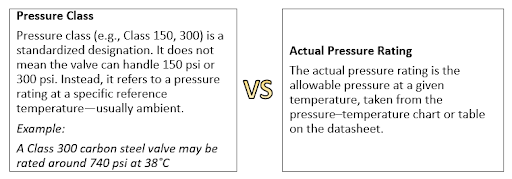
The Pressure–Temperature Rating Table
Here is a sample Pressure-Temperature rating table.
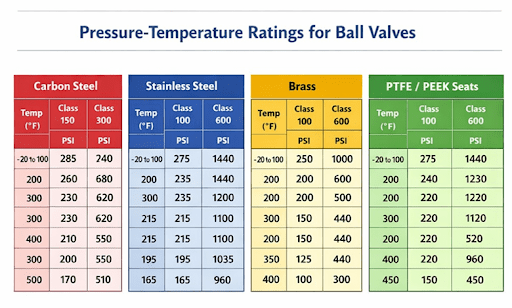
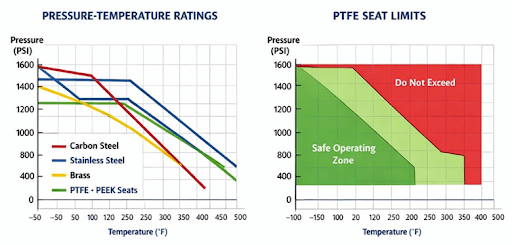
A typical table lists:
- Temperature on one axis
- Maximum allowable pressure on the other
Each row corresponds to a temperature point, often in °C and °F.
Key Things to Look For
- Material-specific tables – Carbon steel, stainless steel, duplex, and alloy steels all behave differently with temperature.
- Non-linear pressure drop – Pressure does not decrease linearly with temperature. At elevated temperatures, strength loss accelerates.
- Upper temperature limits – Beyond a certain temperature, the valve may not be rated at all.
Material Matters More Than You Think
Two valves with identical dimensions and pressure class can have very different pressure temperature ratings simply due to material.
Carbon Steel
- Strong at ambient conditions
- Loses strength rapidly above ~400°C
- Common for general service
Stainless Steel
- Better high-temperature performance
- Improved corrosion resistance
- Often higher pressure retention at elevated temperature
Exotic Alloys
- Designed for extreme temperature and pressure
- Higher cost, tighter manufacturing controls
When reading a datasheet, always confirm the Body, Trim and Bolting material
The weakest component governs the overall valve rating.
Seats, Seals, and Soft Components
Pressure temperature ratings often refer to the pressure-containing parts, not the sealing elements. This is critical.
A valve body may be rated for: 600 psi at 200°C. But the soft seat might only be rated for: 120° C. In that case, the effective valve pressure temperature rating is limited by the seat and not the body.
Always check if the datasheet provides:
- Separate seat temperature limits
- Derating factors for soft-seated designs
Static vs Dynamic Operating Conditions
Datasheet ratings assume static or steady-state conditions. Always consider real system conditions:
- Pressure surges
- Water hammer
- Thermal cycling
- Rapid startup and shutdown
Vacuum and Low-Pressure Considerations
Pressure temperature ratings typically focus on internal positive pressure, but vacuum service matters too.
At elevated temperatures:
- Body strength may be sufficient
- Seats or seals may collapse under vacuum
- External pressure may exceed internal pressure limits
Check whether the datasheet explicitly states:
- Full vacuum rating
- Temperature-dependent vacuum limits
If it doesn’t, ask.
Flanged vs Welded vs Threaded Ends
End connections influence pressure temperature ratings, even if the valve body remains the same.
- Flanged valves are often limited by flange standards
- Threaded valves may have lower allowable pressure at temperature
- Welded ends typically allow higher ratings
Always confirm whether the datasheet rating applies to:
- The bare valve body
- Or the valve with its end connections
Derating and Special Conditions
Manufacturers may include footnotes such as:
- “Ratings apply to non-corrosive service”
- “Consult factory for sour service”
- “Derating applies above X°C”
These notes matter as much as the numbers.
Corrosion, erosion, and hydrogen service can all reduce allowable stress—effectively lowering the usable pressure temperature rating even if the table says otherwise.
Avoid Making These Common Mistakes:
- Using pressure class as a pressure limit
- Ignoring temperature derating
- Overlooking seat temperature limits
- Assuming all materials behave the same
- Forgetting transient conditions
Most valve failures traced back to rating issues are not design flaws—they’re interpretation errors.
How to Apply Pressure Temperature Ratings in Practice
When reviewing a datasheet, follow this checklist:
- Identify the governing standard (e.g., ASME B16.34)
- Confirm body, trim, and seat materials
- Locate the correct pressure–temperature table
- Match your maximum operating temperature, not normal temperature
- Read across to find allowable pressure
- Compare against Maximum operating pressure and Surge pressure
- Add margin for cycling or upset conditions
If the numbers are close, they’re not good enough.
Why “Maximum Allowable” Does Not Mean “Recommended”
Datasheet ratings define the limit, and is not a recommendation.
Operating continuously at 95–100% of rated pressure temperature limits
means:
- Higher stress
- Shorter service life
- Less tolerance for upset events
These ratings should be treated as absolute ceilings and not design targets.
When to Ask the Manufacturer
You should reach out when:
- Operating conditions is near rating limits
- Temperature fluctuates significantly
- Media is corrosive or erosive
- The datasheet is unclear or missing information
A good manufacturer would rather answer a question now than explain a failure later.
Final Thoughts
Pressure–temperature ratings are more than a datasheet requirement—they define how a valve will behave over its entire service life. When read correctly, they provide a clear picture of material limits, design intent, and safe operating boundaries.
Understanding a valve pressure temperature rating means looking beyond pressure class and considering temperature effects, materials, seats, and real operating conditions. It’s a small amount of extra effort during specification, but it pays off through improved reliability, fewer leaks, and fewer surprises during commissioning and operation.
Used properly, pressure–temperature ratings become a design tool rather than a constraint—and a quiet contributor to long-term system performance.
Need Help Verifying Valve Pressure Temperature Ratings?
Selecting a valve based on pressure class alone is a common mistake. The valve pressure temperature rating table governs the real operating limits.
If your application:
-
Operates near rating limits
-
Involves elevated temperature service
-
Experiences pressure surges or cycling
-
Requires ASME B16.34 compliance
Do not assume the table tells the full story.
Atlantic Valves reviews valve pressure temperature ratings against your actual operating conditions before shipment. We verify material limits, seat restrictions, derating factors, and surge margins to reduce risk in the field.
Protect Your Project Before Issuing the PO
Request a technical review or quote today.
Our team supports distributors and engineers with standards-based documentation and fast response.