Pressure is at the core of fluid operations, influencing flow rates, system performance and control mechanisms. Pressure determines how valves and related systems are sized, operated and maintained across different industries. The most common unit for measuring pressure in fluid applications is pounds per square inch (PSI).
Here is a technical guide about PSI pressure for valve distributors. Discover why PSI knowledge is essential for stocking and specifying process valves to drive customer satisfaction.
What is PSI
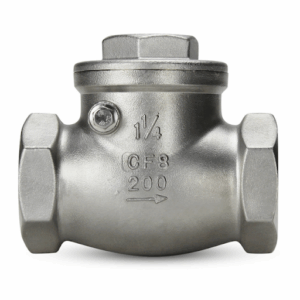
PSI is a unit of pressure measurement, and stands for pounds per square inch. It measures the force exerted over a surface area measuring one square inch. In fluid flow applications, PSI determines how fluids flow past valves and piping systems. To understand this better, let us use an example of an 11/4” Stainless Steel Swing Check Valve (SKU: CV-S032-S). The pressure rating for this valve is 200 PSI. It means the valve can withstand up to 200 pounds per square inch of pressure as fluids pass through it.
While PSI is a popular industry unit, customers may request products using other pressure units. Here is how PSI relates to other units of pressure. You can use it to convert units and make the right product recommendations to your customers.
- 1 PSI=6894.76 Pascals (Pa)
- 14.5 PSI=1 Bar
- 14.7 PSI = 1 atmosphere
There are several ways to measure valve PSI rating. The most common methods are:
- Using mechanical pressure gauges, they convert fluid pressure into dial movement.
- Using digital pressure transducers (strain gauges or capacitive transducers), convert fluid pressure into electrical signals. More accurate than mechanical gauges.
- Using differential pressure drop sensors – monitor pressure drops across two points in a fluid system, e.g., between a valve inlet and outlet.
PSI Ratings and Fluid Flow
Why do PSI ratings of valves matter, and how does it influence fluid flow?
- Fluids flow from high-pressure to low-pressure zones. The pressure differential (ΔP), the difference in PSI, drives fluid flow. Therefore, systems with greater PSI differences will have higher flow rates than those with lower pressure differentials.
- Flow rate across the valves is affected by the pressure drop across them in PSI. The relationship between valve flow rate and pressure drop across it in PSI is guided by the Cv equation. The flow rate is expressed as:
Q=Cv * √(ΔP/SG)
Q is the flow rate in gallons per minute, Cv is the flow coefficient, ΔP is the pressure drop in PSI, and SG is the specific gravity of the service fluid.
- The PSI rating of a valve specifies its maximum working pressure. A higher PSI rating indicates a higher pressure tolerance. Therefore, you can only recommend a valve whose PSI rating is high enough to withstand the system’s working pressure. That guarantees better leakage prevention and structural strength.
How to Read PSI Pressure Ratings and Select Valves
Atlantic Valves distributors are a crucial link to our customers and should be able to identify the pressure ratings of different valves in stock. This knowledge is essential for processing customer orders and also helping potential buyers to make the right decisions. It is important that you offer the right advice and recommend the best fit for each application. Your target as a distributor is to make the right sale and avoid product mismatches and/or returns. So, how do you locate valve PSI ratings?
On the Valve Body
The PSI pressure ratings can be cast, stamped, or engraved on the valve body. The numeric value can be accompanied by additional symbols such as WOG (water-oil-gas), PSI (pounds per square inch), or WSP (working steam pressure). Below are examples of pressure ratings on some of our products. They indicate the maximum allowable fluid pressure under specific operating conditions.
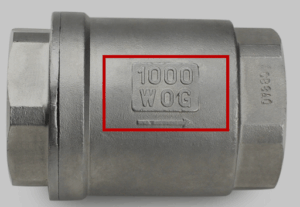
Pressure rating marking on an 11/4” Stainless Steel Vertical Check Valve (SKU: CV-2V032-S). This is rated 1000 PSI and ideal for water, oil and gas.
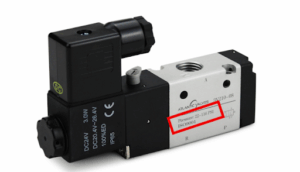
Pressure rating for a ¼ ” 3-Way, 2 Position Pneumatic Solenoid Valve (SKU: 3V210-08) is rated 22-116 PSI.
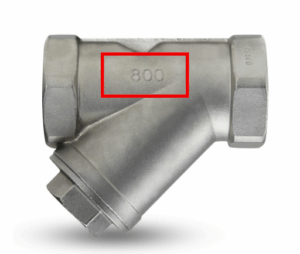
Pressure rating marking for a ½” Stainless Steel Y-Strainer (SKU: YS-1015-S) is rated 800 PSI.
On the Nameplate/ Valve Tag
Some industrial valves have a nameplate containing the valve’s technical specifications. The nameplate or tag holds information such as:
- Maximum working pressure in PSI
- Temperature rating
- Composition of valve material
- Valve size
- Flow characteristics (Cv value)
Product Data Sheet
Atlantic Valves provides detailed product data sheets for all valves. The data sheet is available online, and distributors can use it to identify PSI ratings of valves. The product data sheets are vital for confirming product identifications (using SKU) and cross-referencing to avoid mixing up customer orders.
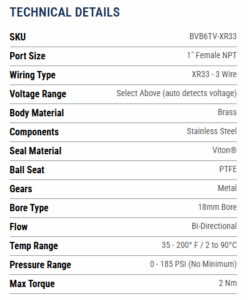
Example of a product technical data sheet for a 1″ Brass 3 Way Electric Ball Valve – 3 Wire (SKU: BVB6TV-XR33). The pressure rating for this valve is 0-185 PSI.
Each valve has a specified maximum PSI rating and you should be able to explain this to customers to assist them with the purchasing process. This rating depends on things like:
- Type of valve material
- Wall thickness of the valve
- The operating temperature range of the fluid system
- Type of end connections
- Prevailing industry standards/application codes
Understand the operating conditions of the fluid system before recommending valves to customers. The dangers of improper valve selection based on their PSI ratings are:
- Using valves with a lower PSI rating than the working pressure exposes the system to fluid leakages and recurrent seal damage.
- Using wrong PSI ratings on valves leads to poor system control and increased noise.
- An incorrect PSI rating can cause delayed actuator responsiveness and incomplete valve closure.
Final Words
Become a distributor and familiarize yourself with the specifics of PSI ratings of different valves in our catalog. Understanding how to identify and interpret PSI ratings on different products will help you to effectively process customer requests. Ensure you evaluate the system performance metrics to select the most appropriate valves for our customers. Focus on finding the perfect fit on the first attempt for the ultimate customer satisfaction.