Chemical processing plants, water treatment plants, mining operations, marine installations, and other industrial applications often have operating conditions that expose equipment to corrosive chemicals, high temperatures, and high pressure. These types of harsh environments often lead to significantly reduced valve life.
Not every industrial valve is designed to handle aggressive chemicals or demanding operating conditions. In facilities where acids, alkalis, saltwater, cleaning chemicals, or corrosive process fluids are part of daily operations, using the wrong valve can quickly become an expensive mistake.
Anti-corrosive valves are built to withstand these environments, but selecting them isn’t as straightforward as choosing a stainless steel body or a plastic valve. Chemical compatibility, operating temperature, pressure, seal materials, and the overall application all influence how well a valve performs over time.
Why Anti-Corrosive Valves Matter in Harsh Environments
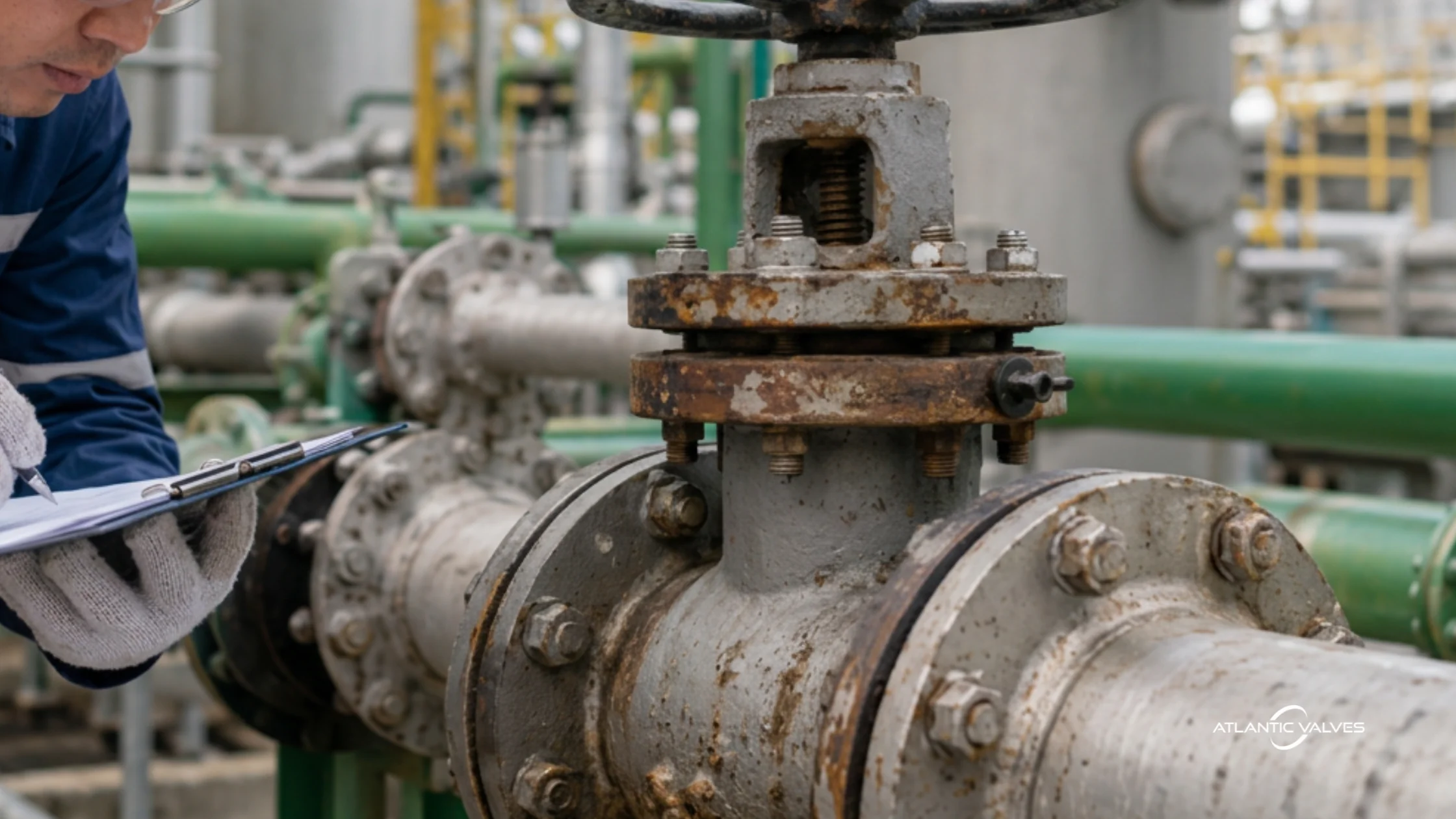
Corrosion affects much more than the appearance of a valve. As materials begin to deteriorate, performance usually declines as well. Internal parts may wear faster, sealing surfaces can become damaged, and operating torque often increases. In many cases, these issues develop gradually.
Common problems caused by corrosion include:
- External Leakage
- Internal Seat Leakage
- Sticking or seized stems
- Higher operating torque
- Premature actuator wear
- Product contamination
- Increased maintenance cost
- Unexpected production downtime
The impact goes beyond repair expenses. In industries that handle hazardous chemicals, a leaking valve can expose personnel to dangerous substances, damage surrounding equipment, or create environmental compliance issues. Even where safety isn’t a concern, replacing failed valves during an unplanned shutdown costs far more than selecting the right valve.
Start with Process Media
One of the most common specification mistakes is choosing a valve based only on pipe size, pressure class, or connection type. Those details matter, but they shouldn’t be the starting point.
The first question should always be: What exactly will flow through the valve?
Different chemicals attack materials in different ways. A valve that performs well with one process fluid may have a much shorter service life with another, even if the operating pressure is identical.
Before selecting anti-corrosive valves, gather detailed information on the following process media characteristics:
-
Is the fluid acidic, alkaline, or neutral?
-
What is the chemical concentration?
-
Does the process contain chlorides?
-
Is the chemical compatible with common seal materials?
-
What is the normal and maximum operating temperature?
Chemical Concentration and Aggressive Fluids
Sulfuric acid is a good example of why chemical concentration and temperature matter. A valve made from 316 stainless steel may be suitable for some cold, highly concentrated sulfuric acid service, but it can be attacked at intermediate concentrations, and higher temperatures can further reduce its suitability. The correct choice therefore depends on the actual concentration and temperature, not simply the chemical name.
This same principle applies to other aggressive chemicals:
-
Saltwater containing chlorides can cause pitting and other forms of corrosion in susceptible stainless steels, particularly as temperature and exposure time increase.
-
For valves exposed to cleaning cycles, cleaning conditions can be more aggressive than the normal process fluid. Therefore, it is important to evaluate the CIP or sanitizing chemicals used, along with their operating temperatures, to ensure the valve materials are suitable for the cleaning process.
-
Harsh liquids such as sodium hypochlorite can attack many common metals, so the valve body, trim, and seal materials should be checked against the actual concentration and temperature. For seal compatibility review, use the seat and seal section below as a follow-up reference.
Managing Suspended Solids and Abrasive Media
Another important consideration when evaluating the process media is whether it contains suspended solids or abrasive particles. Abrasive particles can accelerate wear, so where appropriate, specify full-port construction, keep flow velocity controlled, and expect shorter soft-seat life. Keep in mind that solenoid valves should generally not be used on fluids carrying suspended solids.
Choose the Right Anti-Corrosive Valve Body Material
Selecting the appropriate body material determines how well a valve resists chemical attack and handles mechanical line stresses. The right material depends on the process media, chemical concentration, operating temperature, pressure, and expected service life. While no single material is suitable for every application, understanding the strengths and limitations of each option helps narrow the selection.
PVC (also sold as UPVC or PVC-U)
 |
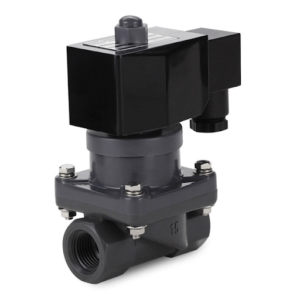 |
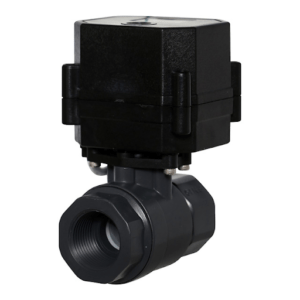
PVC is one of the most widely used materials for corrosive liquid handling because it resists many acids, alkalis, salts, and chemical solutions while remaining lightweight and cost-effective. Unlike metal valves, it does not rust or suffer from galvanic corrosion.
Typical applications include:
- Chemical dosing systems
- Water and wastewater treatment
- Swimming pools
- Fertilizer and irrigation systems
- Acid and alkali transfer
- General industrial chemical handling
PVC is an excellent choice where chemical resistance is more important than high-temperature performance. Atlantic Valves offers Solenoid valves with a UPVC body under the PAC Series.
CPVC
CPVC is a chlorinated form of PVC with higher temperature capability than standard PVC. It can be a useful option for compatible hot-water and chemical applications where standard PVC is temperature-limited. Confirm the exact pressure-temperature rating and chemical compatibility for the selected valve series before use.
PTFE (Teflon®)
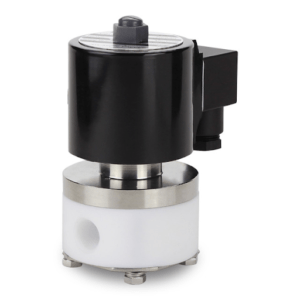
When processing highly aggressive chemicals, PTFE is one of the most chemically resistant materials available. The Atlantic Valves PCF Series uses a PTFE body and PTFE wetted components, with Viton seals, and is listed for 15 to 175°F operation. PTFE can creep under sustained load and after thermal cycling, and its pressure capability is much lower than metal at comparable temperatures. It is also not suitable for abrasive service.
Atlantic valves offer a PCF Series that is intended for corrosive liquids and gases requiring PTFE wetted components and direct-acting operation.
Engineered Nylon
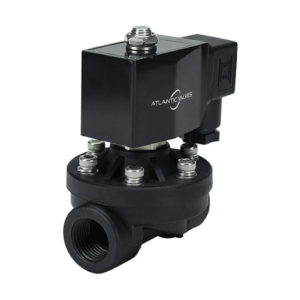
Certain chemical applications benefit from engineered nylon valve bodies, particularly where lightweight construction, impact resistance, and moderate chemical compatibility are desired.
Engineered nylon is commonly used for:
- Water systems
- Agricultural equipment
- Low-pressure chemical handling
- OEM equipment
- Industrial automation
Engineered nylon is an economical option for compatible low-pressure applications, but it should not be treated as a general-purpose chemical valve material. PA66 absorbs moisture, which can change dimensions and reduce strength, and it can be attacked by acids and degraded by UV exposure. For chemical or outdoor service, confirm the exact series rating and material compatibility before selection.
Stainless Steel
 |
 |
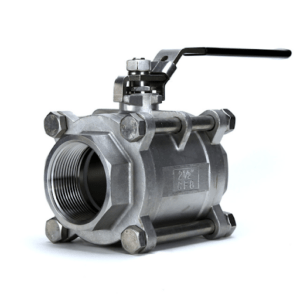 |
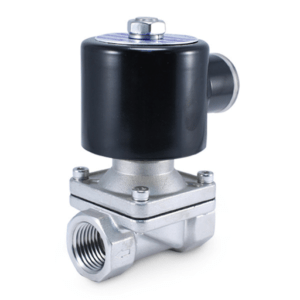
Stainless steel remains the preferred material for many industrial chemical processes because it combines corrosion resistance with high mechanical strength, pressure capability, and temperature resistance.
Among stainless steel grades, 304 and 316 are the most commonly used materials for valve construction across a wide range of industrial applications. Grade 304 stainless steel is widely used for general industrial service, food processing, and washdown environments, while 316 stainless steel offers improved resistance to chlorides and saltwater compared with 304. However, 316 is not universally suitable for seawater or hot chloride-bearing service. Genuine seawater service and hot chloride-bearing process fluids may require a non-metallic valve or a more specialized material after a service-specific compatibility review.
Typical applications include:
- Chemical processing
- Food and beverage production
- Pharmaceutical manufacturing
- Marine systems
- High-pressure process piping
- Steam service when the valve is specifically rated for steam. For example, Atlantic Valves’ SRS Series uses a stainless steel body with PTFE sealing.
Although stainless steel performs well in many corrosive environments, it is not universally resistant to every chemical. Strong acids, chlorides, or oxidizing agents may require specialty alloys or non-metallic materials instead.
Specialty Alloys
Certain industries, including mining, chemical manufacturing, and offshore processing, may require higher-performance alloys such as Duplex Stainless Steel, Hastelloy®, Monel®, or titanium.
These materials are typically reserved for applications involving:
- Concentrated acids
- Chloride-rich environments
- High-temperature chemical processing
- Severe corrosion
- High-pressure chemical service
Although they have a higher initial cost, specialty alloys often provide the lowest lifecycle cost in extremely demanding environments.
Anti-Corrosive Valve Material Comparison Guide
| Material | Suitable For | Limitations / Considerations |
|---|---|---|
| PTFE (Teflon®) | Excellent resistance to a wide range of chemicals and commonly used in chemical processing applications. | PTFE seats have limited resistance to deformation under sustained loads and repeated temperature cycling, which can affect sealing performance over time. |
| EPDM |
|
Not recommended for petroleum products or mineral oil-based lubricants. |
| FKM (Viton®) |
|
Avoid using FKM for hot water, steam, strong caustics, amines, ketones, or esters. EPDM and other specialized elastomers are often better suited for these environments. Material selection should always be based on the specific process fluid and operating conditions. |
Consider the Valve Type
Ball Valves
Ball valves are among the most versatile anti-corrosive valves available. Their quarter-turn operation, full-port design, and reliable shutoff make them suitable for both manual and automated systems.
Corrosion-resistant ball valves are available in materials such as:
- UPVC
- PVC
- CPVC
- Stainless steel
Electric and pneumatic actuators can be added for automated process control, making ball valves one of the most popular choices for industrial automation.
Electric Actuated Valves
For facilities requiring remote operation or integration with PLCs and control systems, automated valves provide greater efficiency and repeatability.
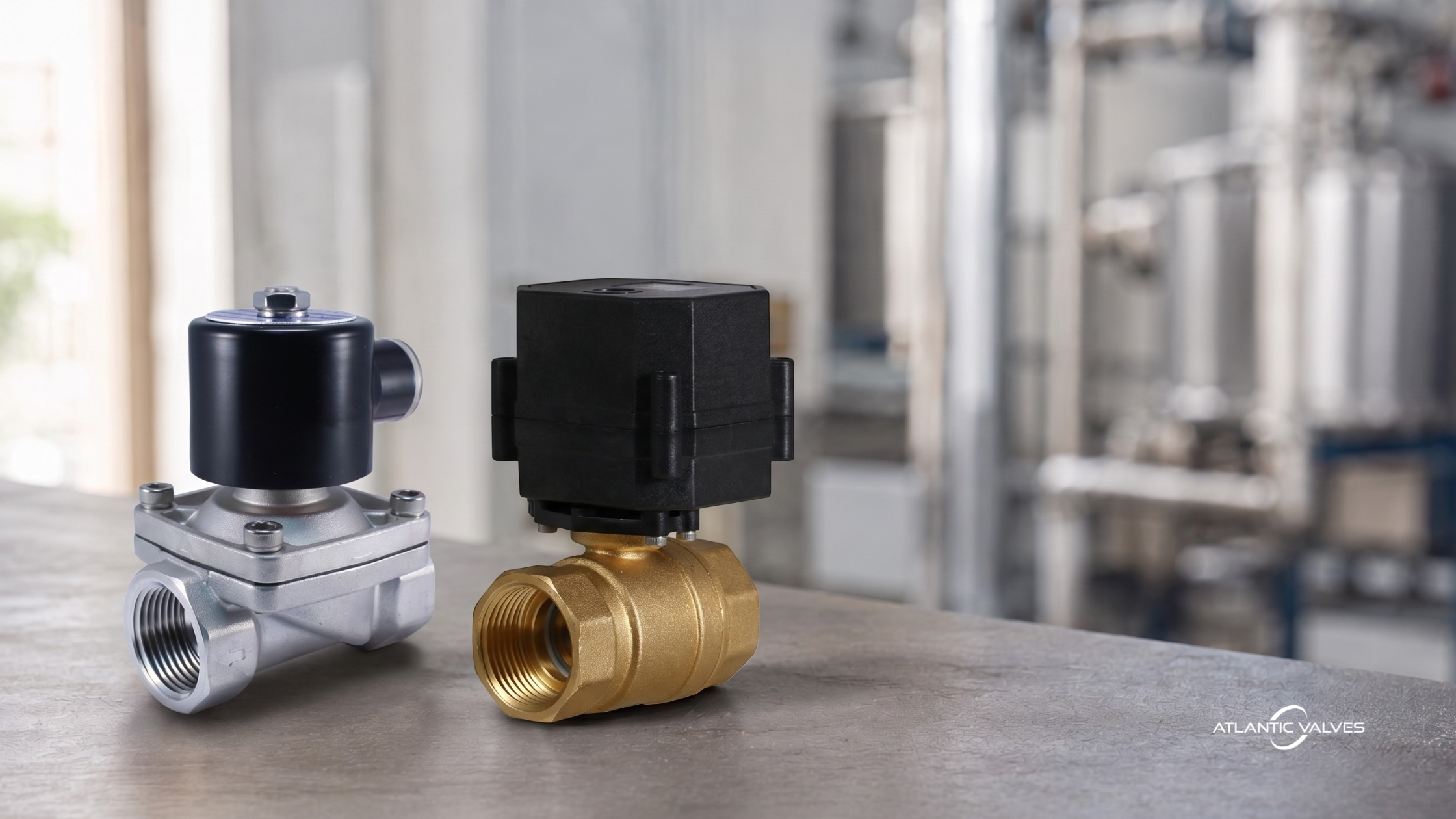
Atlantic Valves offers electric-actuated ball valves and electric solenoid valves in corrosion-resistant materials suitable for chemical processing, water treatment, OEM equipment, and industrial automation. Combining the appropriate valve body material with the correct actuator allows facilities to automate flow control without sacrificing chemical compatibility or reliability.
Solenoid Valves
Solenoid valves are ideal for applications requiring fast, electrically controlled on/off operation. Unlike motorized ball valves, they actuate almost instantaneously and are commonly integrated into automated equipment and process control systems. Fast closing in a liquid line can generate surge pressure, so on long runs or at high flow velocity, it can allow for water hammer when selecting the pressure rating; consider a motorized ball valve with a slower closing time.
Depending on the chemical and operating conditions, corrosion-resistant solenoid valves are available with:
Check Valves
Check valves prevent reverse flow and protect pumps, dosing equipment, and process systems.
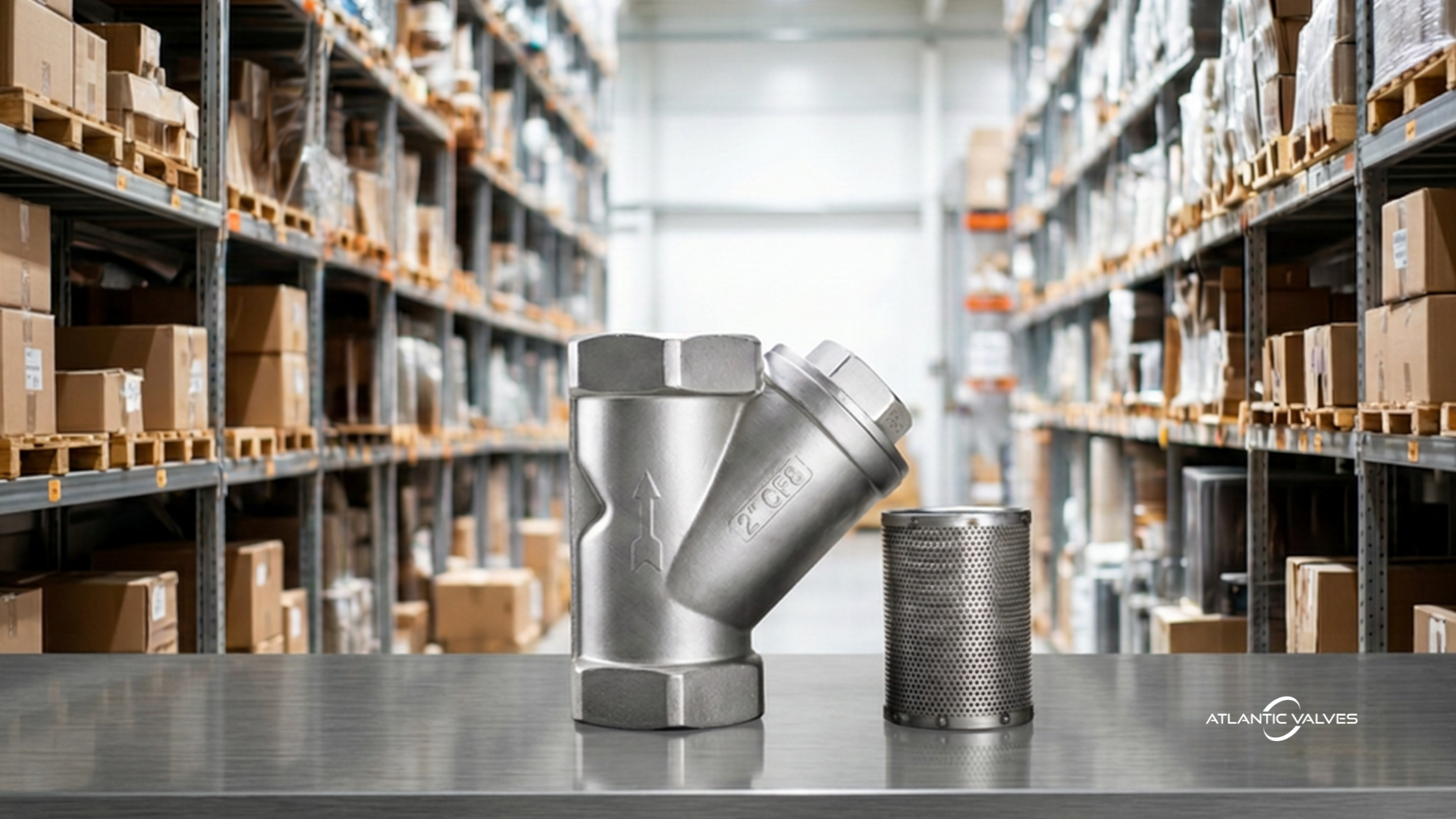
Our current check valve range is stainless steel, so confirm the applicable series and material against the current catalog before specification. Check valves are commonly installed in:
- Chemical transfer lines
- Water treatment systems
- Dosing skids
- Pump discharge piping
Proper material compatibility helps ensure long service life and reliable sealing.
Electric Actuated Valves
For facilities requiring remote operation or integration with PLCs and control systems, automated valves provide greater efficiency and repeatability.
Atlantic Valves offers electric-actuated ball valves and electric solenoid valves in corrosion-resistant materials suitable for chemical processing, water treatment, OEM equipment, and industrial automation. Combining the appropriate valve body material with the correct actuator allows facilities to automate flow control without sacrificing chemical compatibility or reliability.
Don’t Overlook Seat and Seal Materials
The valve body is not the only component exposed to chemicals. In a solenoid valve, the diaphragm is often the first component to fail, and it is frequently made from a different material than the body. Always confirm the diaphragm and seal material, not just the body material.
Seats and seals must also withstand the process media.
Common materials include:
| Material | Suitable For | Limitations / Considerations |
|---|---|---|
| PTFE (Teflon®) | Excellent resistance to a wide range of chemicals and commonly used in chemical processing applications. | PTFE seats have limited resistance to deformation under sustained loads and repeated temperature cycling, which can affect sealing performance over time. |
| EPDM |
|
Not recommended for petroleum products or mineral oil-based lubricants. |
| FKM (Viton®) |
|
Avoid using FKM for hot water, steam, strong caustics, amines, ketones, or esters. EPDM and other specialized elastomers are often better suited for these environments. Material selection should always be based on the specific process fluid and operating conditions. |
Evaluate Operating Temperature for Anti-Corrosive Valves
Temperature greatly influences both corrosion rates and the pressure capability of many valve materials. A valve that performs well at room temperature may have a substantially lower allowable pressure or shorter service life at elevated temperature. Always check the pressure-temperature rating for the exact valve series, size, body material, seat, and seal. Materials that perform well at room temperature may deteriorate rapidly when exposed to elevated temperatures. Chemical compatibility also changes with temperature, so the maximum and continuous operating temperatures should be checked against the process media and every wetted material.
Key Verification Steps for Anti-Corrosive Valve Selection
Before selecting any anti-corrosive valves, verify:
- Maximum operating temperature
- Continuous operating temperature
- Seal material limitations
- Pressure-temperature rating
Chemical compatibility charts typically specify acceptable temperature ranges, but the valve’s pressure-temperature rating and seal limits must also be checked for the exact product configuration.
Anti-Corrosive Product Guide
The table below summarizes Atlantic Valves product series data. Exact pressure-temperature derating can vary by size, configuration, current type, seal, and valve series, so the applicable product datasheet remains the controlling document.
| Series / Body Material | Maximum Media Temperature | Max Pressure at Room Temperature | Best Suited For | Not Suitable / Limitations |
| 2-Piece Manual Ball Valve / SS304 | 356°F (180°C) | 1000 WOG | General industrial piping, water treatment, HVAC, compressed air, agricultural water, equipment isolation, and utility systems handling water, air, oil, gas, and compatible light chemicals. | Not recommended for hydrochloric acid, chloride-rich aggressive service, or other media where SS304 may be susceptible to corrosion. PTFE seats are not compatible with fluorine-based acids. Hot or highly concentrated caustic/alkaline service should also be verified because the stainless-steel body and internal components, rather than the PTFE seat, can become the limiting materials. |
| 3-Piece Manual Ball Valve / SS304 | 356°F (180°C) | 1000 WOG | Chemical processing, water treatment, industrial cleaning, HVAC, compressed air, equipment isolation, maintenance bypasses, and process piping handling water, air, oil, gas, and compatible chemicals. | Not recommended for hydrochloric acid, chloride-rich aggressive service, or other media where SS304 may be susceptible to corrosion. PTFE seats are not compatible with fluorine-based acids. Hot or highly concentrated caustic/alkaline service should also be verified because the stainless-steel body and internal components, rather than the PTFE seat, can become the limiting materials |
| 3-Way L-Port Manual Ball Valve / SS304 | 356°F (180°C) | 1000 WOG | Process plants, water treatment, chemical transfer, tank selection, bypass systems, equipment routing, and utility piping where compatible water, air, oil, gas, or light chemicals need to be diverted between lines. | Not recommended for hydrochloric acid, chloride-rich aggressive service, or other media where SS304 may be susceptible to corrosion. PTFE seats are not compatible with fluorine-based acids. Hot or highly concentrated caustic/alkaline service should also be verified because the stainless-steel body and internal components, rather than the PTFE seat, can become the limiting materials. |
| 3-Way T-Port Manual Ball Valve / SS304 | 356°F (180°C) | 1000 WOG | Chemical and process plants, water treatment, blending systems, tank manifolds, batch processing, fluid distribution, and equipment routing involving compatible water, air, oil, gas, and light chemicals. | Not recommended for hydrochloric acid, chloride-rich aggressive service, or other media where SS304 may be susceptible to corrosion. PTFE seats are not compatible with fluorine based acids. Hot or highly concentrated caustic/alkaline service should also be verified because the stainless-steel body and internal components, rather than the PTFE seat, can become the limiting materials |
| BVP / UPVC Motorized Ball Valve | 130°F (54°C) | 185 psi | Water and wastewater treatment, aquaculture, swimming pools, irrigation, saltwater circulation, chemical dosing, and water distribution involving water, treated water, saltwater, and compatible mild chemical solutions. | Not suitable for high-temperature service above 130°F, strong solvents, aromatic hydrocarbons, ketones, esters, or other chemicals that can attack UPVC. Strong oxidizers and abrasive media or slurries should also be avoided. EPDM further limits compatibility with oils, fuels, and hydrocarbon-based media. |
| BVS / SS304 Motorized Ball Valve | 200°F (93°C) | 185 psi | Water treatment, HVAC, filtration, food and beverage equipment, compressed air, water distribution, and general industrial utilities handling water, air, and compatible non-aggressive fluids. | Not recommended for hydrochloric acid, chloride-rich aggressive service, or other highly corrosive media that can attack SS304. Oils, fuels, and hydrocarbon-based media may also be unsuitable because of the EPDM seal. PTFE seat compatibility does not overcome the EPDM limitation. |
| PSL / PA66 Solenoid Valve | 175°F (79°C) | 100 psi AC / 90 psi DC | Water treatment, filtration, humidification, irrigation, general utilities, washing equipment, and fluid dosing handling water and compatible neutral or mildly treated fluids. | Limited to water, seawater, and neutral media; not suitable for acids, strong alkalis, hydrocarbons, oils, and fuels. |
| SS3J / SS316 Mini Solenoid Valve | 250°F (121°C) | 115 psi AC /
100 psi DC water; 145 psi air |
Industrial automation, water treatment, pneumatic systems, laboratory equipment, light chemical dosing, and compact fluid-control applications involving water, air, light oil, diesel fuel, and compatible weak acids | Not suitable for hot water/steam, ketones, esters, amines, or strong caustic/alkaline service. Hot water should be verified because the FKM seal is the limiting material. Highly aggressive chloride or acid service should also be checked because the internal components are SS304 even though the body is SS316. |
| SZW / SS Solenoid Valve | 250°F (121°C) | 145 psi AC / 115 psi DC water | Water treatment, process water, filtration, humidifiers, washing systems, pneumatic utilities, and general fluid dosing involving water, air, and compatible neutral fluids. | Not suitable for hot water/steam, ketones, esters, amines, or strong caustic/alkaline service. Hot water should be verified because the FKM seal is the limiting material. Highly aggressive chemical service should be evaluated against both the stainless-steel components and FKM diaphragm. |
| SRS / SS Steam Solenoid Valve | 356°F (180°C) | 145 psi AC /
90 psi DC |
Boilers, steam distribution, steam humidification, sterilization, thermal processing, steam ovens, condensate systems, and hot-water service involving steam, hot water, condensate, inert air, and compatible gases. | Not suitable for chemicals that are incompatible with the PTFE seal or stainless-steel wetted components. Highly aggressive chloride service and certain highly concentrated chemical applications should be verified rather than assuming stainless steel/PTFE is universally compatible. |
| PAC – UPVC Anti-Corrosive Solenoid Valve | 140°F (60°C) | 85 psi | Water treatment, cooling towers, chlorine-treated water, saltwater systems, chemical dosing, irrigation, wastewater, and light chemical processing involving mildly to moderately corrosive fluids. | Requires a minimum differential pressure of 4.5 psi and is not suitable for gravity-fed or near-zero-pressure service. Not suitable for abrasive media or slurries, highly concentrated acids, strong oxidizers, or chemicals that attack UPVC or FKM. Chloride-rich, acidic, and other corrosive media must be checked for compatibility with the stainless-steel wetted internal components, UPVC body, and FKM seals. Strong caustics, ketones, esters, amines, and other FKM-incompatible chemicals should be verified before selection. |
| PCF – PTFE Anti-Corrosive Solenoid Valve | 175°F (79°C) | 29 psi | Chemical processing, electroplating, acid pickling, PCB manufacturing, battery manufacturing, chemical dosing, wastewater treatment, and corrosive-fluid handling involving compatible acids, alkalis, hypochlorite, and other aggressive chemicals. | Not suitable for abrasive service because PTFE is relatively soft and can be damaged by solids. FKM remains the limiting seal material for hot water/steam, ketones, esters, amines, and some strong caustics. PTFE is also not suitable for fluorine-based acids and has a substantially lower pressure capability than the metal-bodied valves. |
Compatibility information is provided as a general guide. Base final valve selection on the specific process conditions and all wetted materials. Consult a qualified materials or chemical compatibility expert before ordering for corrosive or demanding applications, and confirm compatibility of the valve body, internal components, seats, and seals with the actual process media, concentration, temperature, and pressure.
Consider Pressure Ratings
Pressure is another important factor.
Selecting a valve solely based on normal operating pressure can lead to premature failure if pressure spikes occur.
Always consider:
- Maximum working pressure
- System surge pressure
- Vacuum conditions
- Safety factor
Ensure the selected valve complies with applicable industry standards and pressure ratings.
Installation Environments for Anti-Corrosive Valves
Sometimes the external environment is just as aggressive as the process fluid.
Outdoor installations may experience:
- Salt spray – primarily threatens exposed fasteners, actuator housings, and electrical connectors, so the complete assembly should be selected for the environment.
- UV exposure – particularly important for plastic valves: PVC and nylon can degrade under sustained sunlight. Use a pigmented or UV-stabilized grade, shielding, an enclosure, or other manufacturer-approved protection
- Humidity – can promote corrosion of exposed metal components and contribute to moisture-related problems in electrical and actuator components. Appropriate material selection and environmental protection should be considered.
- Rain – can expose external components to water ingress and corrosion, particularly at electrical connections, fasteners, and actuator housings. Use suitable enclosures, seals, and corrosion-resistant materials where required.
- Industrial pollution – airborne chemicals, dust, and contaminants can accelerate external corrosion or affect electrical and mechanical components. Consider the surrounding atmosphere when selecting materials and protection.
UV exposure is particularly important for plastic valves: PVC and nylon can degrade under sustained sunlight. Use a pigmented or UV-stabilized grade, shielding, an enclosure, or other manufacturer-approved protection. Salt spray primarily threatens exposed fasteners, actuator housings, and electrical connectors, so the complete assembly should be selected for the environment.
Marine facilities often require carefully selected stainless steel or non-metallic valves because saltwater accelerates corrosion. On outdoor and marine installations, external fasteners, actuator housings, and electrical connectors may fail before the valve body. A 316 stainless valve assembled with unsuitable plated carbon steel fasteners can develop external corrosion quickly, so the complete assembly should be specified for the environment.
Choosing materials designed for both internal and external exposure extends equipment life.
Anti-Corrosive Valve Compliance & Certifications
In many industries, valve selection involves more than chemical compatibility. Projects may require valves that comply with recognized standards for quality, safety, and performance.
Common requirements include:
| Standard / Requirement | Description |
|---|---|
| ASME B16.34 | Valve pressure-temperature ratings and applicable valve requirements |
| ASME B16.5 | Flange dimensions and pressure-temperature ratings of applicable flanged connections |
| ASME B1.20.1 | NPT pipe threads |
| DIN 3202 | Face-to-face and end-to-end dimensions of applicable valves |
| ISO 5211 | Actuator mounting dimensions and interfaces on valves intended for automation |
| NSF/ANSI 61 | Health effects requirements applicable to drinking water system components |
| NSF/ANSI 372 | Lead content requirements in drinking water system components |
| FDA-compliant materials | Applicable food and beverage processing applications |
| CE and RoHS compliance | Applicable electric actuators and solenoid valves |
| UL and CSA requirements | Applicable solenoid coils and electrical components used in North American industrial installations. |
| ATEX and IECEx certification requirements | Solenoids and associated electrical equipment installed in classified or hazardous areas. Atlantic Valves designs its standard solenoid valve range specifically for unclassified areas, so these valves do not carry Ex-ratings. |
Standards, certifications, and approvals apply only where specified for the individual product, configuration, and application. The presence of a standard in this list does not mean that every Atlantic Valves product complies with or is certified to that standard. Always review the applicable product datasheet and project requirements to verify the standards, certifications, and approvals for the specific valve or associated equipment.
FAQs (Frequently Asked Questions)
When should system designers specify PTFE for a valve?
Engineers choose PTFE for highly aggressive chemical service because it provides broad chemical resistance. However, PTFE can creep under sustained load, has lower pressure capability than metal at the same temperature, and is not suitable for abrasive service.
What is the practical difference between EPDM and FKM seals?
Typically, select EPDM for water, steam, and aqueous chemical systems. In contrast, choose FKM for oils, fuels, and hydrocarbons. Because neither material is universally compatible, always match the seal compound to your specific fluid and temperature.
Why does the valve body material not determine chemical compatibility by itself?
Check chemical compatibility for every wetted component, including the body, internal components, seat, diaphragm, and seals. A chemically resistant body can still have a seat, diaphragm, or seal that is incompatible with the process fluid.
Why does valve pressure rating change with temperature?
In general, a valve’s pressure capability decreases as operating temperatures rise—specifically in plastic valves. For this reason, you should never rely on a room-temperature pressure rating at maximum operating conditions. Consequently, operators must always verify the exact pressure-temperature derating curve before installation.
Final Thoughts
Selecting the right anti-corrosive valves is a decision that directly affects equipment reliability, maintenance costs, and operational safety. While price is always a consideration, the least expensive valve is rarely the most economical choice over its service life.
A successful anti-corrosive valve selection process begins with understanding the process media and operating conditions. Furthermore, critical factors such as body material, seat and seal compatibility, pressure and temperature ratings, valve type, and actuation method all play a role in determining the best solution.
As a result, whether you are designing a new chemical processing system, upgrading a water treatment facility, or replacing valves in a harsh industrial environment, investing time in proper valve selection helps prevent premature failures and supports long-term performance.
Need help selecting the right anti-corrosive valve? Atlantic Valves offers a wide range of corrosion-resistant ball valves, check valves, solenoid valves, and automated valve solutions for chemical processing, water treatment, food processing, car wash systems, and other demanding industrial applications. Contact our team for expert guidance on material selection, valve sizing, and automation options to ensure the best fit for your application.