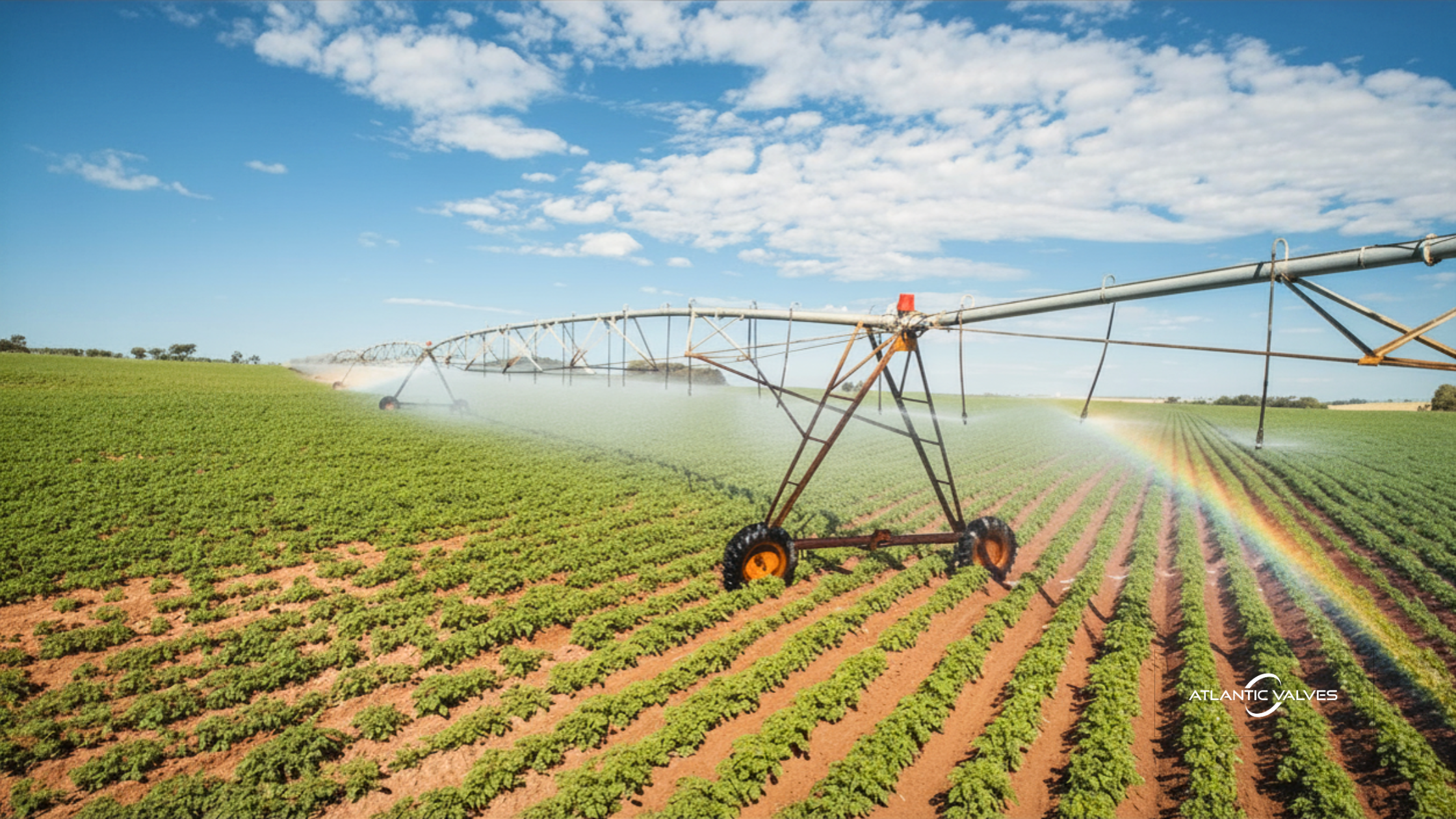
Water management in agriculture has moved far beyond simple distribution. Irrigation systems are essential in agriculture for providing a controlled water supply, improving crop yields, conserving water, and supporting sustainable farming practices. These systems are engineered networks where flow control, pressure regulation, and system protection are all interconnected.
Valves control fluid flow, pressure, and direction. The right valve selection directly affects crop yield, water efficiency, system longevity, and operational reliability.
Functional Role of Valves in Irrigation Networks
From a system perspective, irrigation valves fall into three overlapping roles:
- On/off isolation
- Pressure control
- Directional control and protection
These functions are not independent. A poorly selected valve can introduce pressure losses, disrupt flow uniformity, or create mechanical stress within pipelines.
ISO-based irrigation standards tend to reflect this overlap. The ISO 9635 series, for example, breaks valves into categories (isolating, check, air, control), but still defines performance in terms of continuous operation across partially open positions.
Modern irrigation systems—especially those used in large-scale farming—rely heavily on automation. Electrically or hydraulically actuated valves allow precise scheduling and zoning, which is essential for optimizing crop-specific irrigation requirements.
Agriculture Valves Category
1. Isolation Valves
Isolation valves are commonly installed along mainlines and sub-mainlines. These valves are not intended for throttling but for full-open or fully closed operation.
- Ball valves provide quick quarter-turn operation and tight sealing
- UPVC Ball Valves provide corrosion resistance and automated shutoff applications.
Standards such as ISO 9635-2 distinguish isolating valves from control valves, but field usage tends to blur that distinction.
2. Check Valves (Backflow Prevention)
Check valves ensure unidirectional flow, preventing contamination of the water source. In irrigation, backflow is not just a hydraulic issue—it becomes a contamination risk when fertilizers or chemicals are introduced.
This becomes especially important in systems involving:
- Fertilizer injection (fertigation)
- Chemical dosing (chemigation)
Chemigation systems often require multiple protective components, including check valves and vacuum relief mechanisms, to avoid reverse contamination of water supplies
3. Air Release and Vacuum Valves
Air valves are essential components in irrigation systems because they prevent trapped air from accumulating within the pipeline. While the presence of air may not always be immediately obvious, it can lead to reduced efficiency, flow restrictions, and other operational issues over time. It’s more subtle:
- Reduced flow in certain zones
- Corrosion
- Inconsistent emitter output
- Occasional pressure spikes
Installers typically position air release valves at high points, along long horizontal runs, and near pump discharge.
4. Solenoid and Automated Valves
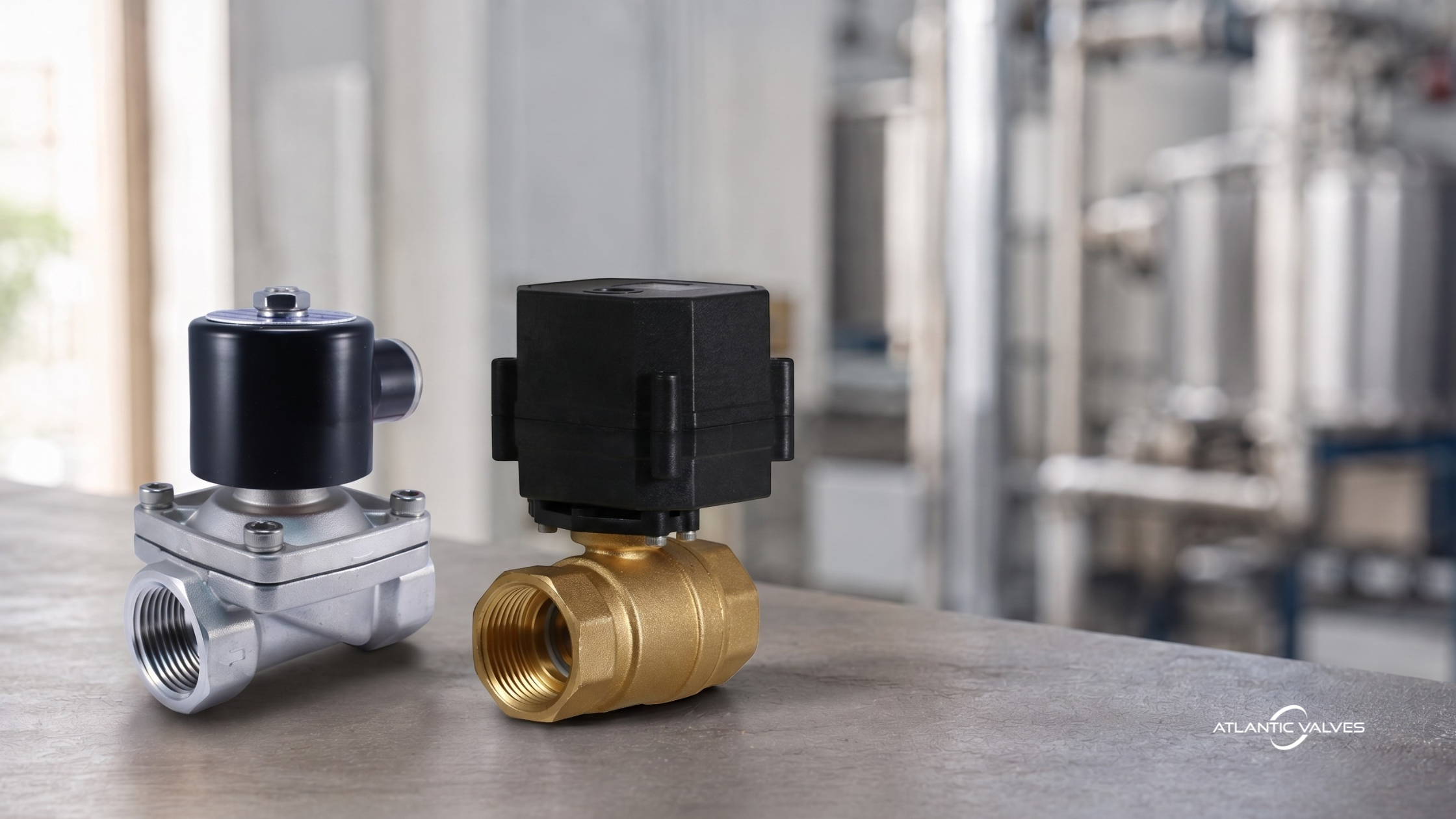
Solenoid valves are electrically controlled valves that automate water flow to specific zones, enabling efficient and precise irrigation. Automation is now standard in modern irrigation. Solenoid valves enable remote or programmed operation through irrigation controllers.
Atlantic Valves Solenoid Solutions
- PAC UPVC Solenoid Valves – Offer corrosion-resistant uPVC construction ideal for irrigation water, fertilizers, and agricultural fluids where metal may be unsuitable
- General Purpose Series Solenoid Valves – Electrically actuated on/off valves designed for reliable automatic fluid control. Suitable for irrigation with timers and irrigation controllers.
- PA66 (Engineered Nylon) Solenoid Valves – Lightweight, durable plastic valves for general-purpose water and utility service, offering corrosion resistance and dependable operation in agricultural environments.
Design and Engineering Considerations
Pressure–Temperature Ratings
Even though irrigation systems typically operate at moderate pressures, valves must still meet defined safety criteria. Valve Pressure-Temperature rating is the safe operating limits of a valve.
Material Selection
Agricultural environments are often harsh. Valves are exposed to:
- UV radiation
- Fertilizers and chemicals
- Sediments and particulates
- Variable pressure conditions
As a result, material selection is critical.
Common materials include:
- Ductile iron – for strength in high-pressure systems
- Stainless steel – for corrosion resistance
- Engineering plastics (PVC, nylon) – for lightweight and chemical resistance
Hydraulic Performance and System Integration
Understanding system requirements is one of the keys to valve selection – a valve is not an isolated component; it interacts with the irrigation network.
Key performance parameters include:
- Pressure loss (ΔP)
- Flow coefficient (Cv or Kv)
- Response time (for automated valves)
- Sealing integrity
Improper valve sizing or selection can lead to:
- Uneven irrigation distribution
- Increased energy consumption
- Premature equipment wear
Agriculture Valve Selection Criteria
Selecting irrigation control valves involves more than matching pipe size. It involves basic hydraulic checks together with how the system is actually operated in the field.
1. System Type
Different irrigation layouts have different requirements:
- Drip systems generally need tighter pressure regulation to avoid emitter variation
- Sprinkler lines are more sensitive to flow consistency across zones
- Flood irrigation setups are less restrictive, mostly requiring isolation or on/off control for large volumes
2. Flow Rate and Pressure Range
Valve sizing should match the expected duty range rather than just the line size.
- Oversizing tends to reduce controllability, especially at low flow conditions.
- Undersizing increases pressure loss and may limit downstream performance.
3. Water Quality
The water source has a direct impact on valve selection. Systems handling:
- suspended solids
- organic debris
- chemical content (fertigation, treated water)
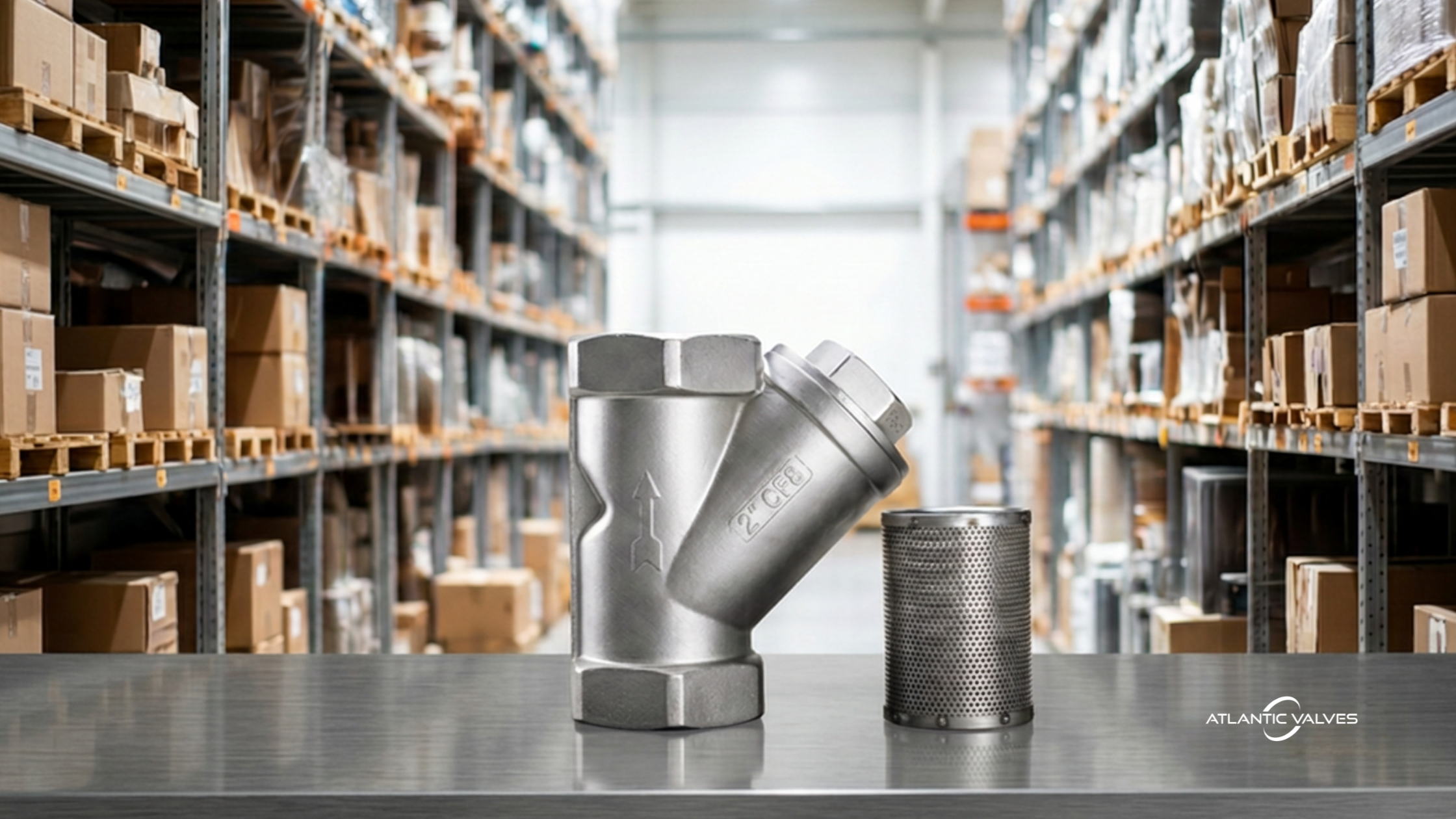
Will need internal geometries and sealing materials that can tolerate fouling, scaling, or chemical attack. Straight-through designs or valves with minimal cavities are often preferred where clogging is expected. For systems with a high level of debris or particulate matter, Y-strainers can be installed upstream to help protect valves and reduce maintenance requirements.
4. Automation Requirements
Automation has become standard in modern irrigation systems. Valves are increasingly integrated with:
- Controllers and timers
- Soil moisture sensors
- Weather-based irrigation systems
Electrically actuated valves allow remote operation, enabling precise scheduling and reducing water waste.
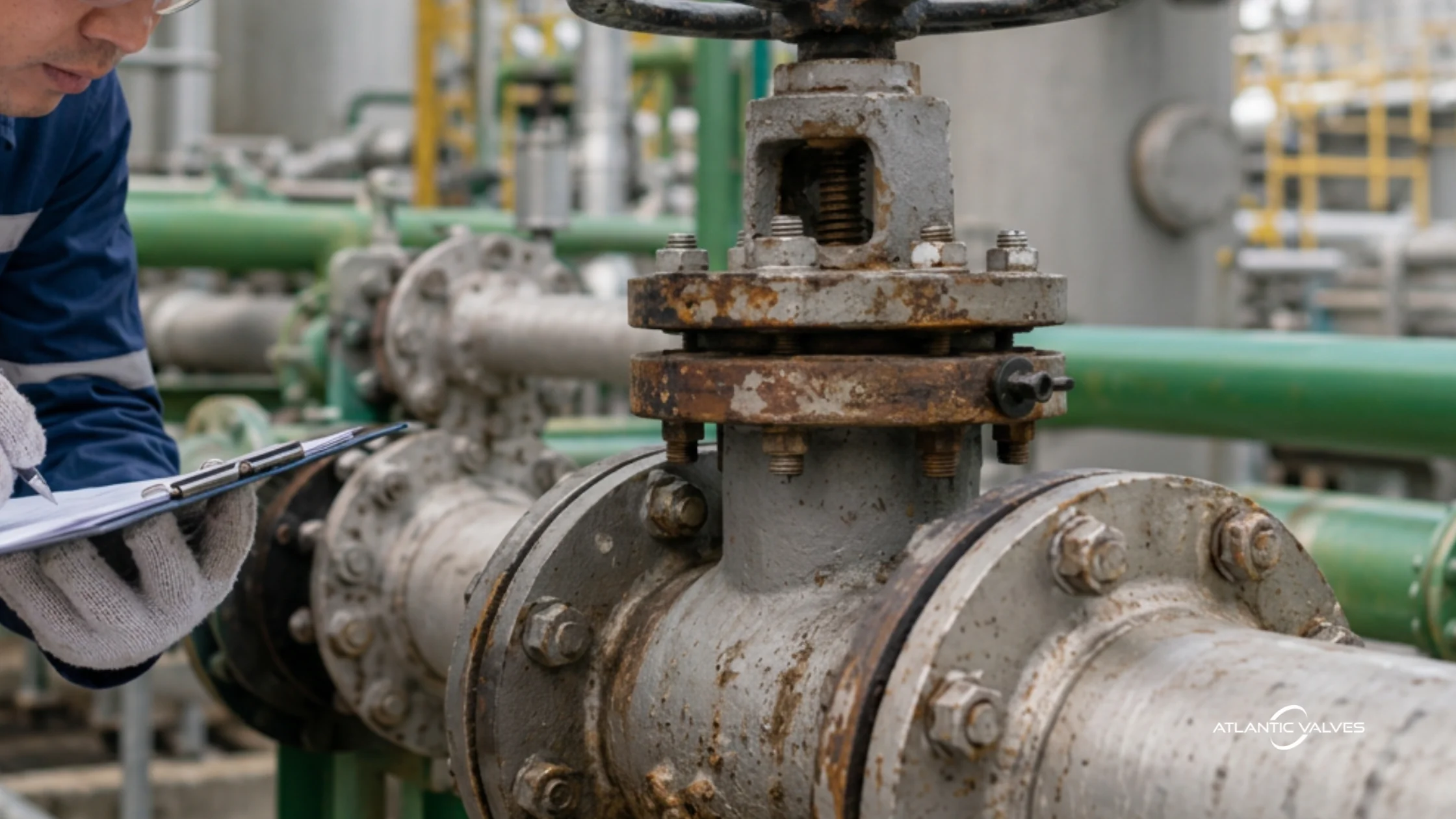
5. Maintenance and Accessibility
Field conditions are not ideal, so maintenance tends to drive long-term performance more than initial specs.
Valves should allow:
- straightforward disassembly without specialized tools
- tolerance to wear from continuous cycling or debris
- service intervals that align with actual field access, not ideal conditions
Conclusion
Irrigation control valves in agricultural systems don’t just handle flow.
They ultimately affect pressure behavior, water distribution, and how the system responds when zones open or close. As a result, they often influence overall system performance more than expected.
Industry standards set some baseline requirements for performance. Actual system behavior depends on:
- Valve selection depending on operating conditions
- Placement within the hydraulic network
- Interaction with water quality and filtration
- Maintenance practices over time
In practice, the success of an irrigation system often depends not only on its design but on how effectively its valves are specified, installed, and maintained.